
Liability Coverage Review for Security Contracts

A break-in, parking lot altercation, access-control dispute, or injury at an event can become more than an operational problem in a matter of hours. It can trigger claims, documentation requests, and difficult questions about who was responsible for what. A liability coverage review helps property managers, business owners, and event operators confirm that their security arrangement is built for the risks they actually face – not just the minimum requirements listed in a contract.

For clients hiring guards, patrol units, or event security, insurance should support a disciplined security plan. It does not replace trained personnel, clear post orders, reliable supervision, or prompt reporting. It does provide a critical layer of financial protection when an incident leads to a claim.

Why a Liability Coverage Review Matters for Security

Security vendors work in environments where conditions can change quickly. Officers may encounter trespassers, handle access disputes, respond to alarms, patrol large parking areas, direct crowds, document property damage, or contact law enforcement. Each assignment carries a different level of exposure.

A standard insurance certificate can confirm that a policy exists, but it may not answer the questions that matter most to a client. Does the coverage apply to the services being performed? Are the limits appropriate for the property, event, or contract? Are key exclusions understood before an incident occurs? Does the agreement clearly divide responsibilities between the client and the security provider?

A careful review protects both sides. The client gains greater confidence that its vendor is prepared, while the security provider has a clearer understanding of the scope, site conditions, and reporting expectations. That clarity reduces surprises when fast decisions are required.

Start With the Risks at Your Property or Event

The right coverage requirements depend on the assignment. A quiet office building with controlled entry has different exposures than a construction site with valuable equipment, a multifamily community with overnight patrols, or a large event with alcohol service and dense crowds.

Begin by identifying where a loss could occur and who may be affected. Consider visitor traffic, late-night operations, isolated parking areas, cash handling, valuable inventory, weather conditions, active construction zones, and prior incidents involving theft, trespassing, vandalism, or confrontations. If armed officers are being considered, the review should account for that elevated operational responsibility as well.

It also helps to define what the security team is and is not expected to do. Guards may deter crime, observe and report, control access, make scheduled patrols, document hazards, and contact emergency services. They are not automatically responsible for correcting unsafe property conditions, maintaining lighting, repairing gates, or replacing a client’s internal safety program. Clear boundaries reduce misunderstandings and make insurance requirements more practical.

What to Examine During a Liability Coverage Review

A meaningful review goes beyond asking for a certificate of insurance. The contract language, policy details, and operational plan should tell the same story.

  • Commercial general liability: This is typically the foundation for third-party bodily injury and property damage claims. Review the per-occurrence limit, aggregate limit, deductible or self-insured retention, and whether the limits fit the scale of the assignment. A multi-site commercial portfolio or high-attendance event may warrant different limits than a small, low-traffic location.
  • Security-specific exclusions and endorsements: Not every liability policy responds the same way to security operations. Ask whether the policy addresses allegations connected to assault and battery, use of force, false arrest, detention, or other actions that may arise from guard services. The exact terms matter. A broad exclusion can create a serious gap if the services involve confrontation risk or armed coverage.
  • Workers’ compensation and employer liability: Security personnel work active shifts, often outdoors, overnight, or across large properties. Verify how employee injuries are addressed and whether the vendor’s approach meets the client’s contractual requirements. Texas has unique workers’ compensation rules, so clients should avoid assumptions and review the vendor’s actual documentation with their risk advisor or legal counsel.
  • Auto and umbrella liability: Mobile patrol operations create vehicle exposure, especially when officers use marked units or travel between multiple sites. Auto coverage may need to address owned, hired, or non-owned vehicles depending on the arrangement. An umbrella or excess liability policy can provide additional limits above underlying coverage, but clients should confirm which policies it follows and whether relevant claims are included.

Some contracts also require additional insured status, waiver of subrogation, or primary and noncontributory wording. These are not interchangeable phrases, and they should not be copied into a contract without understanding the intended purpose. A qualified insurance professional or attorney can help determine which requirements are appropriate for the relationship and whether the required endorsements are actually available.

Match the Insurance Requirements to the Contract

A contract should not require coverage that has no connection to the actual assignment. At the same time, vague language such as “adequate insurance” leaves too much room for disagreement later. The strongest approach is specific, reasonable, and tied to the operational scope.

For example, a contract for unarmed lobby coverage during business hours may focus on general liability, employee injury protection, and professional conduct. A contract for overnight patrol of a construction site may add vehicle exposure, site access procedures, and theft-reporting requirements. Event security may require closer attention to crowd management, entry screening, emergency coordination, and the responsibilities of organizers, vendors, and venue operators.

Review indemnification provisions with the same care. These clauses can shift responsibility between parties, but they cannot make an uninsurable risk disappear. A client should not expect a security company to accept responsibility for hazards it does not control, such as defective stairs, poor lighting, unsafe pavement, or a venue’s alcohol service. Likewise, a security provider should be accountable for its own acts, omissions, training, supervision, and performance under the agreement.

Coverage Works Best With Strong Operations

Insurance becomes more useful when the security operation produces clear, timely records. If an incident occurs, the first questions often concern what happened, when it happened, who was notified, and what the officer observed. Gaps in reporting can complicate even a well-insured claim.

Before service begins, establish incident-reporting expectations. Determine who receives reports, how quickly serious incidents must be escalated, who contacts law enforcement or emergency medical services, and how video, access logs, photographs, or witness information will be preserved. For recurring assignments, regular communication between property leadership and the security supervisor can identify issues before they develop into claims.

Post orders should also reflect the site’s real conditions. A guard who is asked to monitor a loading dock, parking lot, gate, and lobby at the same time may not be positioned to provide meaningful coverage in any one area. Proper staffing, patrol frequency, and supervisor oversight are risk-control decisions, not simply service preferences.

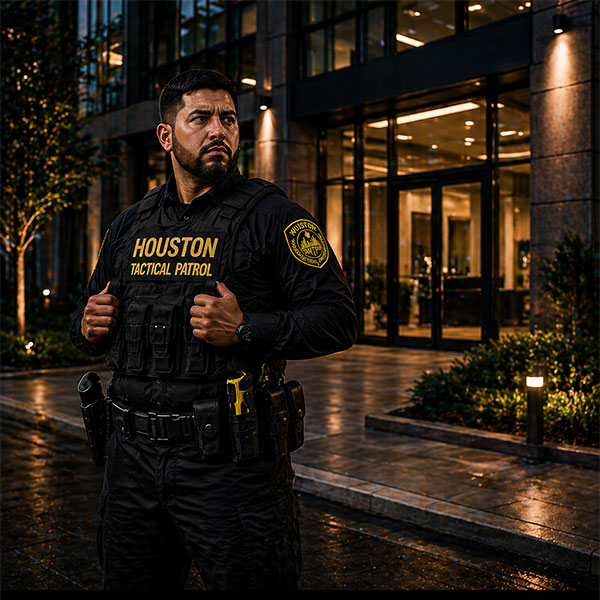
Houston Tactical Patrol LLC approaches security planning with the same practical standard: define the assignment, staff it appropriately, maintain visible coverage, and document activity professionally. Those fundamentals support safer operations and give clients a stronger foundation when questions arise.

Common Gaps That Deserve Attention

One frequent issue is relying on an old certificate that no longer reflects the vendor’s current policy period or operations. Certificates should be current, but they are still summaries. When the assignment involves higher exposure, request confirmation of the relevant endorsements and discuss any material exclusions.

Another issue is assuming that one party’s insurance covers every loss at the property. In reality, several policies may be involved, including those held by the property owner, tenant, event organizer, contractor, and security provider. The answer depends on the facts, the contracts, and the policy language.

Finally, do not let insurance paperwork distract from site conditions. Broken fencing, poor exterior lighting, uncontrolled keys or access cards, blind camera areas, and inconsistent visitor procedures can increase risk regardless of policy limits. Security coverage should be part of a wider plan for deterrence, response, and accountability.

Make Coverage Review a Routine Business Practice

A liability coverage review should happen before a new security contract is signed, when services materially change, and at renewal. It is also wise to revisit requirements after a serious incident, expansion to new locations, a change in operating hours, or a shift from unarmed to armed services.

Assign one decision-maker to collect certificates, endorsements, and contract requirements, then involve the organization’s insurance broker or legal counsel when questions arise. Security providers should be prepared to explain their coverage documentation clearly and promptly. Clients should be equally prepared to share accurate information about the site and its risks.

The goal is not to create more paperwork. It is to make sure the security plan, contract, and insurance protections are aligned before a difficult situation tests them. That preparation helps protect people, property, operations, and the working relationship everyone depends on.
A break-in, parking lot altercation, access-control dispute, or injury at an event can become more than an operational problem in a matter of hours. It can trigger claims, documentation requests, and difficult questions about who was responsible for what. A liability coverage review helps property managers, business owners, and event operators confirm that their security arrangement is built for the risks they actually face – not just the minimum requirements listed in a contract.

For clients hiring guards, patrol units, or event security, insurance should support a disciplined security plan. It does not replace trained personnel, clear post orders, reliable supervision, or prompt reporting. It does provide a critical layer of financial protection when an incident leads to a claim.

Why a Liability Coverage Review Matters for Security

Security vendors work in environments where conditions can change quickly. Officers may encounter trespassers, handle access disputes, respond to alarms, patrol large parking areas, direct crowds, document property damage, or contact law enforcement. Each assignment carries a different level of exposure.

A standard insurance certificate can confirm that a policy exists, but it may not answer the questions that matter most to a client. Does the coverage apply to the services being performed? Are the limits appropriate for the property, event, or contract? Are key exclusions understood before an incident occurs? Does the agreement clearly divide responsibilities between the client and the security provider?

A careful review protects both sides. The client gains greater confidence that its vendor is prepared, while the security provider has a clearer understanding of the scope, site conditions, and reporting expectations. That clarity reduces surprises when fast decisions are required.

Start With the Risks at Your Property or Event

The right coverage requirements depend on the assignment. A quiet office building with controlled entry has different exposures than a construction site with valuable equipment, a multifamily community with overnight patrols, or a large event with alcohol service and dense crowds.

Begin by identifying where a loss could occur and who may be affected. Consider visitor traffic, late-night operations, isolated parking areas, cash handling, valuable inventory, weather conditions, active construction zones, and prior incidents involving theft, trespassing, vandalism, or confrontations. If armed officers are being considered, the review should account for that elevated operational responsibility as well.

It also helps to define what the security team is and is not expected to do. Guards may deter crime, observe and report, control access, make scheduled patrols, document hazards, and contact emergency services. They are not automatically responsible for correcting unsafe property conditions, maintaining lighting, repairing gates, or replacing a client’s internal safety program. Clear boundaries reduce misunderstandings and make insurance requirements more practical.

What to Examine During a Liability Coverage Review

A meaningful review goes beyond asking for a certificate of insurance. The contract language, policy details, and operational plan should tell the same story.

  • Commercial general liability: This is typically the foundation for third-party bodily injury and property damage claims. Review the per-occurrence limit, aggregate limit, deductible or self-insured retention, and whether the limits fit the scale of the assignment. A multi-site commercial portfolio or high-attendance event may warrant different limits than a small, low-traffic location.
  • Security-specific exclusions and endorsements: Not every liability policy responds the same way to security operations. Ask whether the policy addresses allegations connected to assault and battery, use of force, false arrest, detention, or other actions that may arise from guard services. The exact terms matter. A broad exclusion can create a serious gap if the services involve confrontation risk or armed coverage.
  • Workers’ compensation and employer liability: Security personnel work active shifts, often outdoors, overnight, or across large properties. Verify how employee injuries are addressed and whether the vendor’s approach meets the client’s contractual requirements. Texas has unique workers’ compensation rules, so clients should avoid assumptions and review the vendor’s actual documentation with their risk advisor or legal counsel.
  • Auto and umbrella liability: Mobile patrol operations create vehicle exposure, especially when officers use marked units or travel between multiple sites. Auto coverage may need to address owned, hired, or non-owned vehicles depending on the arrangement. An umbrella or excess liability policy can provide additional limits above underlying coverage, but clients should confirm which policies it follows and whether relevant claims are included.

Some contracts also require additional insured status, waiver of subrogation, or primary and noncontributory wording. These are not interchangeable phrases, and they should not be copied into a contract without understanding the intended purpose. A qualified insurance professional or attorney can help determine which requirements are appropriate for the relationship and whether the required endorsements are actually available.

Match the Insurance Requirements to the Contract

A contract should not require coverage that has no connection to the actual assignment. At the same time, vague language such as “adequate insurance” leaves too much room for disagreement later. The strongest approach is specific, reasonable, and tied to the operational scope.

For example, a contract for unarmed lobby coverage during business hours may focus on general liability, employee injury protection, and professional conduct. A contract for overnight patrol of a construction site may add vehicle exposure, site access procedures, and theft-reporting requirements. Event security may require closer attention to crowd management, entry screening, emergency coordination, and the responsibilities of organizers, vendors, and venue operators.

Review indemnification provisions with the same care. These clauses can shift responsibility between parties, but they cannot make an uninsurable risk disappear. A client should not expect a security company to accept responsibility for hazards it does not control, such as defective stairs, poor lighting, unsafe pavement, or a venue’s alcohol service. Likewise, a security provider should be accountable for its own acts, omissions, training, supervision, and performance under the agreement.

Coverage Works Best With Strong Operations

Insurance becomes more useful when the security operation produces clear, timely records. If an incident occurs, the first questions often concern what happened, when it happened, who was notified, and what the officer observed. Gaps in reporting can complicate even a well-insured claim.

Before service begins, establish incident-reporting expectations. Determine who receives reports, how quickly serious incidents must be escalated, who contacts law enforcement or emergency medical services, and how video, access logs, photographs, or witness information will be preserved. For recurring assignments, regular communication between property leadership and the security supervisor can identify issues before they develop into claims.

Post orders should also reflect the site’s real conditions. A guard who is asked to monitor a loading dock, parking lot, gate, and lobby at the same time may not be positioned to provide meaningful coverage in any one area. Proper staffing, patrol frequency, and supervisor oversight are risk-control decisions, not simply service preferences.

Houston Tactical Patrol LLC approaches security planning with the same practical standard: define the assignment, staff it appropriately, maintain visible coverage, and document activity professionally. Those fundamentals support safer operations and give clients a stronger foundation when questions arise.

Common Gaps That Deserve Attention

One frequent issue is relying on an old certificate that no longer reflects the vendor’s current policy period or operations. Certificates should be current, but they are still summaries. When the assignment involves higher exposure, request confirmation of the relevant endorsements and discuss any material exclusions.

Another issue is assuming that one party’s insurance covers every loss at the property. In reality, several policies may be involved, including those held by the property owner, tenant, event organizer, contractor, and security provider. The answer depends on the facts, the contracts, and the policy language.

Finally, do not let insurance paperwork distract from site conditions. Broken fencing, poor exterior lighting, uncontrolled keys or access cards, blind camera areas, and inconsistent visitor procedures can increase risk regardless of policy limits. Security coverage should be part of a wider plan for deterrence, response, and accountability.

Make Coverage Review a Routine Business Practice

A liability coverage review should happen before a new security contract is signed, when services materially change, and at renewal. It is also wise to revisit requirements after a serious incident, expansion to new locations, a change in operating hours, or a shift from unarmed to armed services.

Assign one decision-maker to collect certificates, endorsements, and contract requirements, then involve the organization’s insurance broker or legal counsel when questions arise. Security providers should be prepared to explain their coverage documentation clearly and promptly. Clients should be equally prepared to share accurate information about the site and its risks.

The goal is not to create more paperwork. It is to make sure the security plan, contract, and insurance protections are aligned before a difficult situation tests them. That preparation helps protect people, property, operations, and the working relationship everyone depends on.

Powered by ❤ iGlobalWeb

Scroll to Top