A break-in at 2:00 a.m., unauthorized vehicles at a construction site, or a disruptive guest at a crowded event can become a costly operational problem before management is even aware of it. Choosing a private security company Texas businesses can rely on is not simply about placing a uniform at a door. It is about creating dependable coverage, visible deterrence, clear reporting, and a response plan that fits the risks at your property.
For property managers, business owners, community boards, and event operators, the right provider reduces the burden of managing after-hours concerns. The wrong provider can leave coverage gaps, create inconsistent service, and add liability at the moment protection is needed most.
Start With the Risks at Your Property
Security needs are never one-size-fits-all. A retail center dealing with shoplifting and loitering needs a different approach than an apartment community managing gate access, package theft, and parking issues. A warehouse may need scheduled patrols around loading areas, while a special event may require access control, crowd management, and rapid coordination with onsite leadership.
Before requesting a proposal, identify what is actually happening at the site. Consider the hours when risk increases, the areas most vulnerable to trespassing, the value of assets on the property, and the type of interactions officers may face. This gives a security provider enough information to recommend the right staffing level and post orders instead of offering a generic quote.
A clear scope may include a fixed-post officer at an entrance, marked patrols through a large property, overnight fire watch, or a combination of services. The objective is not to overstaff a location. It is to place trained personnel where their presence can prevent problems and support a timely response.
Verify Licensing Before You Compare Price
A lower quote is not automatically a better security solution. In Texas, private security services are regulated, and clients should confirm that a provider is properly licensed through the Texas Department of Public Safety. Licensing matters because it demonstrates that the company operates within the state’s security requirements and is accountable for the personnel it assigns.
Ask direct questions about the company’s licensing, insurance coverage, officer qualifications, and training process. A dependable provider should be comfortable explaining how officers are screened, how credentials are maintained, and how assignment-specific expectations are communicated.
Armed coverage deserves additional attention. An armed officer can provide a stronger visible deterrent in higher-risk environments, but it is not appropriate for every property. The decision should reflect the threat level, the customer-facing nature of the site, client policy, and the officer’s qualifications. Unarmed officers are often the better fit for access control, hospitality-focused assignments, residential communities, and lower-risk patrol duties.
Look for Supervision, Not Just Staffing
Hiring guards is only part of the equation. Consistent performance depends on supervision, scheduling discipline, communication, and accountability after an officer arrives on site.
When evaluating a private security company in Texas, ask how it confirms shifts are filled and how it handles call-offs, emergencies, and relief coverage. A provider should have a process for responding when an officer is delayed, a post requires extra support, or a client’s needs change unexpectedly. Security coverage is only valuable when it is present and prepared.
You should also ask who reviews incident reports, who conducts field supervision, and how concerns are escalated. A guard who observes a damaged gate, suspicious vehicle, or safety issue should not simply make a note and move on. The provider should have a reporting chain that brings the issue to the right people quickly.
For multi-site operations, centralized communication is especially valuable. It allows management to receive consistent reporting while the security company coordinates staffing across locations without forcing the client to manage every schedule adjustment.
Require Clear Post Orders and Reporting
Officers perform best when expectations are specific. Post orders should explain where the officer is assigned, what areas require attention, how often patrols occur, which individuals should be contacted for support, and what actions are expected during common incidents.
Strong post orders also define the limits of the assignment. Security officers are not a replacement for law enforcement, emergency medical services, or fire personnel. Their role is to observe, deter, document, enforce site rules within their authority, communicate with management, and contact emergency services when the situation requires it. Clear boundaries protect the officer, the client, and the public.
Reporting should be useful to operations, not just paperwork. A well-written daily activity report can document patrol times, visitor concerns, maintenance hazards, access issues, and unusual activity. Incident reports should be factual, timely, and detailed enough to support internal decisions, insurance matters, or follow-up with law enforcement.
For a residential community, reporting may reveal recurring parking violations or gate failures. For a commercial property, it may identify patterns of trespassing near a loading dock. Over time, those observations help management address the source of a problem rather than repeatedly reacting to it.
Match the Service to the Environment
The most effective security program reflects how people actually use the property. A highly visible patrol vehicle may be the right deterrent for a shopping center or industrial site. A professional, customer-service-oriented officer may be more appropriate for a hotel, office building, or community entrance.
Consider these common service approaches when discussing coverage:
- Armed officers may be appropriate for locations with elevated risk, valuable assets, or a need for a stronger visible security presence.
- Unarmed officers support access control, observation, visitor management, policy enforcement, and professional onsite coverage.
- Patrol units provide scheduled or randomized checks across larger properties, parking areas, vacant buildings, and multiple locations.
- Event security helps manage entry points, crowd flow, restricted areas, and coordination with event staff.
- Fire watch services provide documented onsite monitoring when a fire protection system is impaired and coverage is required.
The best choice depends on the property, the hours of operation, the volume of visitors, and the specific risks involved. A provider that asks detailed questions before recommending services is more likely to build a practical plan.
Evaluate Professionalism at the First Conversation
Security officers represent your property. Their conduct affects tenants, employees, customers, guests, and vendors. Professional appearance and communication are not minor details. They influence whether people feel protected and whether the officer can enforce site expectations without creating unnecessary friction.
Pay attention to how the company communicates before the contract begins. Are proposals clear about services, schedules, and responsibilities? Does the provider ask about your operations rather than immediately pushing a standard package? Can you reach a real point of contact after business hours?
Dependable providers balance authority with judgment. Officers need to be alert, visible, and prepared to act, but they also need to communicate respectfully with residents, customers, and staff. That balance is particularly important in Houston-area properties where business activity, residential traffic, and event operations can overlap at all hours.
Build Flexibility Into the Agreement
Security needs can change quickly. A tenant moves out, construction begins, an incident raises concern, or an event draws more attendees than expected. Your agreement should make it clear how additional coverage is requested, how service changes are documented, and how quickly the provider can respond.
This does not mean every contract must be short-term or constantly changing. Stable, recurring coverage often gives a property the strongest results because officers learn the layout, routines, contacts, and recurring concerns. Still, a security company should be able to scale responsibly when circumstances demand it.
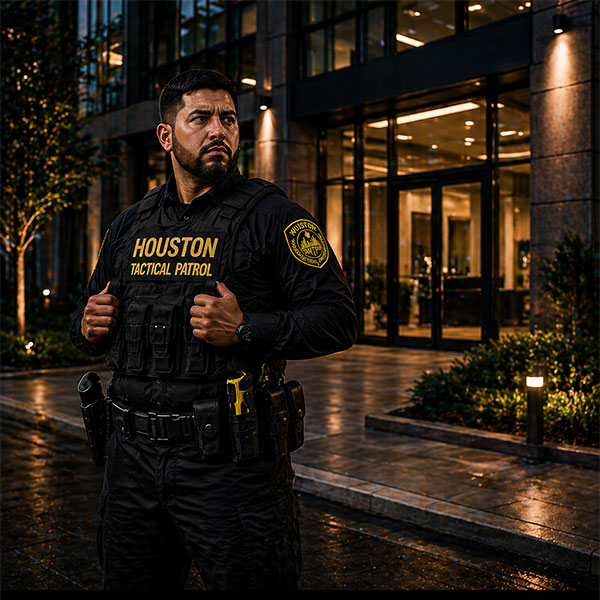
Houston Tactical Patrol LLC works with clients who need tailored guard and patrol coverage rather than a preset security package. That approach matters because a small business with a single location should not be managed like a multi-property operation, and a major event should not be planned like a routine overnight patrol.
The right security partner should make protection easier to manage. Choose a company that understands your property, documents its work, maintains dependable coverage, and treats every assignment as a responsibility to your people, assets, and reputation.