A sold-out room, a popular performer, or a high-profile guest can turn a routine event into a security challenge quickly. The top event security planning mistakes rarely come from a lack of concern. They happen when organizers make assumptions about crowd behavior, staffing needs, access points, or what their team will do when conditions change.
Security should support the event experience, not overshadow it. Done well, trained personnel create visible order, guide guests confidently, protect restricted areas, and respond before small problems become major disruptions. The key is planning coverage around the real risks of the event, not simply placing a guard at the front door.
Why Top Event Security Planning Mistakes Create Real Exposure
Event security is not just about preventing fights or removing an unwanted guest. It affects liability, emergency response, traffic flow, vendor coordination, property protection, and the reputation of the organizer. A lapse at a loading entrance can lead to unauthorized access. A poorly managed parking area can create theft and guest-safety concerns. An unclear communication process can delay a response when every minute matters.
The right level of coverage depends on the venue, guest count, event type, alcohol service, operating hours, neighborhood conditions, attendee profile, and whether the event has public-facing or restricted areas. A private corporate reception and an outdoor music event may have the same attendance number but require entirely different security plans.
1. Treating Security as a Last-Minute Staffing Need
One of the most common errors is calling for security shortly before the event and asking for a certain number of officers without discussing the operation. Last-minute coverage can still provide valuable protection, but it limits the ability to assess the site, identify vulnerabilities, assign posts correctly, and coordinate with venue personnel.
Security planning should begin when the event layout and schedule take shape. A site walk or detailed review of the property can reveal blind spots, poorly lit paths, unsecured gates, congested entrances, and areas where guests may wander into operations or private spaces.
Rather than starting with, “How many guards do we need?” start with, “What needs to be protected, controlled, and monitored?” That question produces a more useful staffing plan.
2. Staffing by Headcount Alone
Guest count matters, but it is not a complete staffing formula. Two hundred guests entering through one controlled lobby may be manageable with a small, well-positioned team. Two hundred guests spread across multiple entrances, outdoor areas, parking lots, and vendor zones can require significantly more coverage.
Security staffing should account for the pace and movement of the event. Consider arrival periods, ticket scanning, bag checks where appropriate, alcohol service, stage changes, VIP arrivals, vendor load-in, and the end-of-event exit. These are the moments when crowds compress and personnel can be pulled away from their posts.
A plan also needs relief coverage. Officers need breaks, supervisors may need to address incidents, and unexpected activity can require a second person. Scheduling every officer at full capacity leaves no room for real-world conditions.
3. Leaving Access Control Undefined
Many event issues begin with a simple question that nobody answered clearly: who is allowed through this door?
Restricted areas should be identified before event day. That includes backstage zones, offices, cash-handling areas, equipment storage, green rooms, loading docks, employee entrances, and any area containing sensitive materials. The security team needs a clear method for recognizing authorized people, whether that is a credential, wristband, guest list, escort process, or designated point of contact.
Access control should also be consistent. If one team member lets a person through based on a verbal claim while another requires credentials, the policy stops working. Brief all staff, vendors, and venue personnel on the process so security is not forced to enforce rules that others are ignoring.
Event Security Planning Mistakes at the Perimeter
Organizers often focus on the venue entrance and overlook the area around it. Yet parking lots, side gates, ride-share pickup points, smoking areas, and loading zones may present the highest risk for theft, trespassing, disputes, and unsafe pedestrian movement.
4. Ignoring Parking, Traffic, and Arrival Conditions
Guests form their first impression of an event before they reach the door. Poor lighting, unclear directions, unmanaged traffic, and no visible patrol presence can create confusion and opportunity for criminal activity.
A perimeter plan should address where vehicles enter and exit, how pedestrians move from parking to the venue, where ride-share drivers stop, and how emergency vehicles could access the site. For larger events, it may also require traffic coordination, visible patrols, and post assignments that keep officers from being trapped inside while exterior concerns go unmonitored.
This is especially relevant for evening events, temporary venues, construction-adjacent properties, and locations with large open parking areas. The plan does not need to be complicated, but it must acknowledge the full property, not just the check-in table.
5. Assuming Everyone Will Know Who Is in Charge
During a disruption, confusion grows when security, venue management, event organizers, medical personnel, and vendors have separate chains of command. A strong event plan identifies who can make decisions, who contacts emergency services, who communicates with the client, and who can authorize a pause, evacuation, or reopening of an area.
Security officers should receive a pre-event briefing that covers the schedule, key contacts, post assignments, emergency exits, restricted zones, expected attendance, special guests, and known concerns. The organizer should also know who the on-site security supervisor is and how to reach that person immediately.
Radio communication can be effective, but only if channels, terminology, and escalation procedures are understood. For smaller events, a disciplined phone and contact process may be enough. The method matters less than having one that works under pressure.
6. Using a Generic Emergency Plan
A copied emergency plan may satisfy a paperwork requirement, but it will not help much if it does not reflect the venue. Security and event leadership should discuss practical scenarios: a medical emergency in a dense crowd, severe weather during an outdoor event, a missing child, an intoxicated guest, a fire alarm, an active threat report, or a dispute that begins in the parking area.
The goal is not to predict every possible incident. It is to establish actions that are clear enough to follow quickly. Officers should know evacuation routes, assembly areas, emergency access points, and when to contact law enforcement or fire personnel.
Armed coverage, if appropriate for the event and provided by properly licensed personnel, should be part of a deliberate risk assessment, not a default decision. Visible armed officers can be a meaningful deterrent in certain circumstances, while other events may be better served by professional unarmed officers, mobile patrols, and strong access control. The right approach depends on the risk, venue expectations, and the event’s operational needs.
7. Failing to Coordinate With Vendors and Venue Staff
Caterers, DJs, production crews, cleaning teams, delivery drivers, and temporary workers can create a large volume of legitimate movement around a site. Without coordination, security may not know who belongs where, and vendors may view reasonable access procedures as an obstacle.
Give vendors clear load-in windows, entrance instructions, parking directions, and a contact for access questions. Ask the venue which doors remain open, which alarms are active, where utility rooms are located, and which areas require special handling. These details reduce friction while protecting the property.
8. Skipping Documentation and Post-Event Follow-Through
An incident report is not merely administrative paperwork. Accurate documentation preserves details, supports client decision-making, and helps identify whether a problem is isolated or likely to repeat. Security personnel should document material incidents, removals, medical calls, property damage, suspicious activity, and policy violations according to the assignment requirements.
After the event, take a few minutes to review what happened. Were entrances adequately staffed? Did guests gather in an unplanned area? Was radio coverage reliable? Did the event exit create congestion? This review is how a security plan improves from one event to the next.
Build a Plan That Holds Up Under Pressure
A dependable event security plan is specific enough to guide action and flexible enough to adapt when attendance, weather, timing, or crowd behavior changes. Before confirming coverage, organizers should be able to identify the event footprint, access points, critical assets, command contacts, emergency procedures, and expected pressure points.
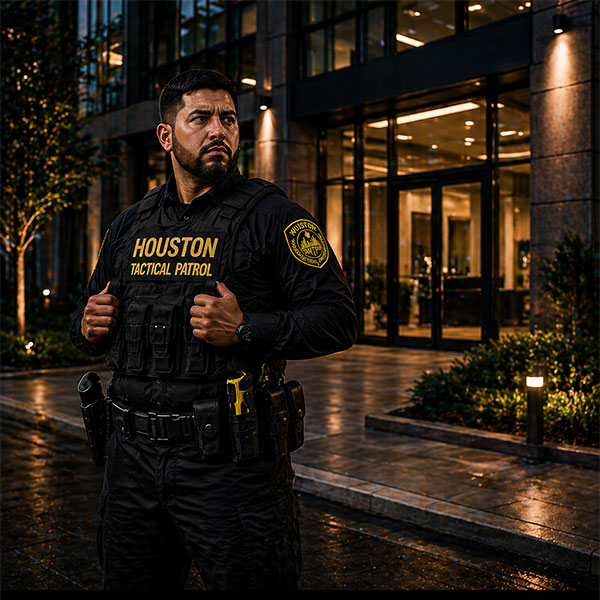
Houston Tactical Patrol LLC helps event operators build staffing plans around those practical needs, with professional personnel positioned to provide visible deterrence, access control, patrol coverage, and responsive support.
The best time to solve an event security problem is before guests arrive. Clear assignments, trained personnel, and direct communication give your team the confidence to focus on the event while security stays prepared for what may happen next.