A vacant loading dock at 2:00 a.m. does not need the same protection as a crowded event entrance at 7:00 p.m. That is where private security services either solve a problem efficiently or waste a client’s budget. The difference usually comes down to fit – matching the right level of visibility, staffing, and response to the actual risk on site.
For business owners, property managers, and event operators, security is rarely a one-size-fits-all purchase. You may be dealing with recurring trespassing, after-hours theft, tenant safety concerns, access control issues, or the need for a professional presence that reassures customers and staff. The right provider helps reduce those pressures without making operations more complicated.
What private security services actually cover
Private security services can mean several different things depending on the property, schedule, and threat level. In practical terms, these services usually include on-site officers, mobile patrol units, event coverage, fire watch support, access control monitoring, and after-hours property checks. Some sites need a constant physical presence. Others need a flexible patrol model that covers more ground at a lower cost.
That distinction matters. A retail center with frequent loitering may benefit from visible patrols and officer interaction. A construction site with expensive equipment may need overnight checks, perimeter monitoring, and strict reporting. A residential community may want a professional presence that supports residents while discouraging unauthorized entry. The goal is not simply to place a guard on location. The goal is to reduce risk in a way that fits how the property actually operates.
Why businesses invest in private security services
Most clients do not start looking for security because they want another vendor to manage. They start because something is already exposing the property to avoidable loss. Sometimes the issue is obvious, such as break-ins, vandalism, or repeated theft. Sometimes it is less visible, like growing liability concerns, inconsistent access procedures, or staff feeling unsafe during opening and closing hours.
Private security services address those problems in two ways. First, they create visible deterrence. A trained officer, marked patrol unit, or active entry point presence can stop bad behavior before it starts. Second, they provide a response structure. When an incident does happen, there is someone on site or nearby who knows the post orders, understands the property, and can act quickly and professionally.
That combination has value beyond incident prevention. It helps property owners maintain order, support tenants, reassure employees, and show customers or residents that safety is taken seriously. In many environments, that visible professionalism matters almost as much as the security function itself.
Choosing the right type of private security services
The right security plan depends on how people use the property, when it is most vulnerable, and what kind of incidents are most likely.
On-site officers
Dedicated on-site officers work well when your location needs a steady presence. This is common for office properties, residential communities, hotels, industrial sites, medical facilities, and retail environments where access points, visitor activity, or tenant interaction require continuous attention. An on-site officer can monitor entry areas, enforce site rules, document incidents, and respond immediately when something changes.
There is a trade-off, though. A full-time post gives you consistency and visibility, but it is also a larger commitment than limited patrol coverage. For locations with lower traffic or narrower risk windows, a permanent post may be more coverage than the site really needs.
Mobile patrol services
Patrol services make sense when you need strong deterrence without staffing a fixed post around the clock. A patrol unit can conduct scheduled or randomized checks, inspect doors and gates, monitor for suspicious activity, and provide a visible presence across a larger area. This is often a practical fit for shopping centers, parking lots, warehouses, and multi-building properties.
Patrol is efficient, but it works best when the security goals are clear. If your biggest concern is overnight trespassing or perimeter checks, patrol may be exactly right. If your property needs active visitor management or continuous observation at a single access point, patrol alone may leave gaps.
Armed and unarmed coverage
This decision should be based on risk, not preference. Armed officers may be appropriate for sites with elevated threats, high-value assets, cash handling, or situations where a stronger deterrent is justified. Unarmed officers are often the better fit for lower-risk environments where customer service, de-escalation, professionalism, and rule enforcement are the main priorities.
A good security plan does not default to the highest level of force. It aligns the officer profile with the environment. Over-securing a site can create the wrong atmosphere. Under-securing it can leave clients exposed.
Event security and temporary coverage
Events create short-term security demands that can become high-pressure very quickly. Crowd movement, access control, parking coordination, VIP areas, alcohol service, and emergency response all require planning before guests arrive. Event security needs to be visible, organized, and adaptable.
Temporary coverage also matters outside event settings. Fire watch assignments, emergency guard coverage, and short-notice protection for a vacant or damaged property require fast staffing and clear communication. In those situations, reliability is not a bonus. It is the service.
What to look for in a security provider
Not every security company delivers the same level of consistency. For decision-makers, the real question is not just whether a provider offers guards or patrols. It is whether they can manage coverage in a disciplined way over time.
Licensing is the first checkpoint. A properly licensed provider shows that the company operates within state requirements and understands the standards attached to the work. Training matters just as much. Officers should know how to observe, report, de-escalate, enforce post orders, and represent the property professionally.
Responsiveness is another major factor. If schedules change, incidents occur, or coverage needs expand, you need a company that answers quickly and adjusts without confusion. Security failures often come from weak coordination rather than lack of manpower.
Reporting should also be clear and usable. Clients need to know what happened on site, what actions were taken, and whether patterns are developing. Good reporting supports accountability and helps property managers make better operational decisions.
The cost question clients always ask
Security pricing depends on staffing level, officer type, hours of coverage, site complexity, and risk exposure. That means the cheapest option is rarely the most cost-effective one.
If low-cost coverage leads to poor attendance, weak supervision, or unprofessional conduct, the property still carries the risk while paying for a service that does not solve the problem. On the other hand, overspending on coverage that exceeds the site’s actual needs can strain operations without adding meaningful protection.
The better approach is to define the objective first. Are you trying to prevent theft, manage access, calm tenant concerns, secure a construction perimeter, or support a public event? Once that is clear, the service model can be built around it. The right proposal should feel specific to your site, not copied from a generic staffing template.
Why customization matters more than broad promises
Security is operational. That means details matter. Shift timing, gate procedures, incident escalation, property layout, lighting conditions, traffic patterns, and local activity all affect what good coverage looks like.
A provider that takes time to understand those details is more likely to deliver useful private security services. A provider that sells a standard package without evaluating the site may still place personnel, but the service can miss the real problem. That is often why some properties stay frustrated even after hiring security.
In Houston and other active commercial markets, clients often need solutions that can scale. A single location may begin with nightly patrols and later add weekend guard coverage. A property portfolio may need different service models at different sites. Flexibility is not just convenient. It is part of building protection that actually fits the operation.
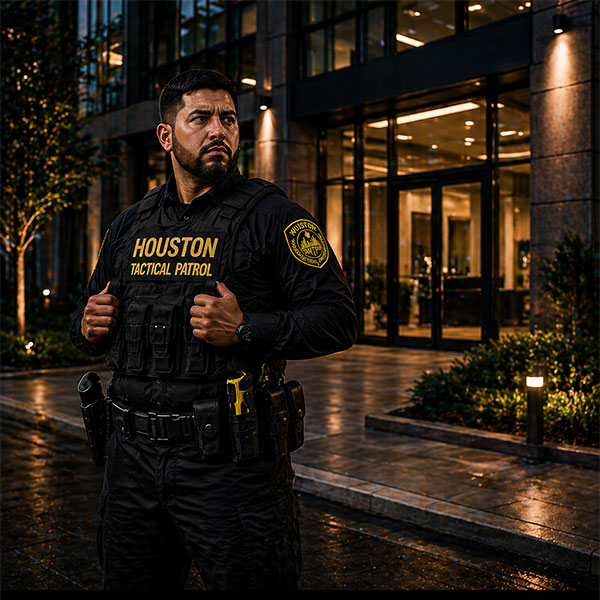
Houston Tactical Patrol LLC reflects that service model well because the focus stays on dependable coverage, visible deterrence, and practical staffing options rather than unnecessary complexity.
The strongest security programs are not always the most aggressive or the most expensive. They are the ones that match the environment, show up consistently, and reduce the burden on the client. When private security services are planned that way, they do more than protect a property. They help the people responsible for that property sleep a little easier.