A break-in at a closed property, an escalating dispute in a parking lot, or repeated trespassing at a construction site can force a fast security decision. The right answer is not always the highest level of force. Armed and unarmed security guard services should be selected based on the actual risks at your property, the people your officers will encounter, and the level of visible deterrence your operation needs.
For Texas business owners, property managers, and event operators, the goal is consistent: protect people, control access, discourage crime, and maintain a professional environment without making daily operations harder. A well-planned guard program does that by matching the officer, post orders, schedule, and response procedures to the site.
What Is the Difference Between Armed and Unarmed Coverage?
Unarmed security officers provide a visible, trained presence without carrying a firearm. They are often assigned to access control points, lobby desks, retail locations, residential communities, construction sites, and events. Their work may include checking credentials, documenting incidents, conducting patrols, enforcing property rules, observing suspicious activity, and contacting law enforcement or emergency services when needed.
Armed security officers carry a firearm as permitted by their licensing, training, company policy, and applicable law. They are generally considered when a property faces a higher threat profile or has valuable assets, sensitive operations, prior violent incidents, or elevated after-hours exposure. Their presence can provide a stronger visual deterrent and may be appropriate where a more capable response posture is required.
Neither option is automatically better. An armed officer can be the responsible choice for one site and an unnecessary escalation for another. The decision should follow a practical assessment of risk, not assumptions about property type or size.
Start With the Risks at Your Property
The most useful security plans begin with specific questions. What has happened on-site? What is most likely to happen next? Who is present during the highest-risk hours? A property that experiences package theft and unauthorized entry needs a different approach than a facility storing expensive equipment or handling high-value transactions.
Look at incident history first. Repeated vandalism, copper theft, vehicle break-ins, trespassing, employee conflicts, and threats against staff all reveal where coverage may be needed. Also consider the hours when the property is most exposed. Many businesses are secure during operating hours but become vulnerable at closing, overnight, or during shift changes.
The surrounding environment matters as well. Is the property isolated? Does it have several entrances, poorly lit areas, large parking lots, or open public access? A guard cannot be everywhere at once, so site design affects whether a fixed post, foot patrol, vehicle patrol, or a combination of services will be most effective.
For many clients, the best result comes from layered coverage. An unarmed officer may manage access and visitor screening during business hours, while scheduled vehicle patrols support after-hours deterrence. If the risk assessment supports it, armed officers can be positioned at locations or times where the threat level is higher.
When Unarmed Security Guards Make Sense
Unarmed officers are often the right fit when the main objective is prevention, accountability, and professional supervision. Their presence communicates that the property is actively managed. That alone can discourage opportunistic theft, loitering, unauthorized access, and rule violations.
They are especially effective in environments where customer service and clear communication are central to the assignment. Apartment communities, office buildings, retail centers, schools, hotels, medical offices, and private events frequently benefit from officers who can greet visitors, monitor entry points, provide directions, write detailed reports, and de-escalate concerns before they grow.
Unarmed coverage is not passive coverage. Professional officers should remain alert, follow post orders, patrol consistently, document activity, and act quickly when an issue develops. They can preserve evidence, protect the scene, notify management, coordinate with first responders, and provide reliable incident reporting that supports future decisions.
Unarmed assignments also allow clients to create a less intimidating atmosphere where that matters. A residential community may want residents to feel protected without making common areas feel heavily controlled. A hospitality venue may need security that is attentive and firm while remaining welcoming to guests.
When Armed Security Is the Better Choice
Armed coverage should be considered when the potential consequences of an incident are more severe. This may include facilities with high-value inventory, banks and financial operations, certain industrial sites, sensitive infrastructure, locations with a documented history of violent threats, or properties where employees handle cash or valuable goods after hours.
A firearm does not replace sound procedures. Armed officers still need clear post orders, communication standards, patrol routes, reporting requirements, escalation protocols, and management oversight. The value of armed coverage comes from a trained, disciplined professional operating within a defined security plan, not simply from the presence of a weapon.
Clients should also understand the responsibility that comes with armed assignments. The officer must be properly licensed and qualified for the role, and the security provider should have clear standards for training, supervision, incident documentation, and use-of-force decision-making. In Texas, licensing requirements matter. Hiring a properly licensed security company helps ensure that the personnel assigned to your property meet the applicable state requirements.
Armed officers are not law enforcement, and they do not replace police response or emergency medical services. Their role is to protect the client’s property and people within the scope of their assignment, observe and assess developing situations, and respond according to training, policy, and law.
Build a Security Plan Around the Assignment
A guard program is only as effective as the instructions behind it. Before coverage begins, define what the officer is expected to protect, where they should be positioned, how often patrols should occur, and who receives reports. Vague expectations lead to inconsistent coverage. Clear post orders create accountability for both the guard and the client.
A strong plan should address access control, visitor procedures, keys and credential handling, patrol checkpoints, parking enforcement, emergency contacts, incident escalation, and communication with on-site management. For event security, it should also cover entry screening, crowd movement, prohibited items, guest removal procedures, and coordination with venue staff.
The schedule deserves equal attention. A single overnight officer may be appropriate for a small, controlled property. A large apartment community or industrial site may require multiple patrols, a dedicated gate officer, or 24/7 staffing. Short-term fire watch assignments require a different level of observation and documentation than ongoing commercial patrol services.
Do not overlook reporting. Timely, detailed reports show whether officers are completing their duties and give property managers a record of incidents, observed hazards, and recurring problems. Good reporting turns security from a simple presence into a management tool. It helps identify patterns, justify improvements, and show that concerns were addressed promptly.
Questions to Ask Before Hiring a Security Provider
Security staffing affects your employees, residents, customers, and reputation, so the selection process should be deliberate. Ask how the provider assesses sites and develops post orders. Confirm the company’s licensing and insurance status, then ask how officers are supervised after they are assigned.
You should also understand how the provider handles call-offs, emergencies, and schedule changes. A security plan fails when a post is left uncovered. Reliable staffing depends on responsive communication, backup procedures, and management that treats coverage continuity as a priority.
Ask about the experience of the officers being assigned to your type of property. A professional who excels at access control for a corporate office may need different skills than an officer assigned to a high-traffic event or an active construction site. The provider should be able to explain why its recommended staffing model fits your operation.
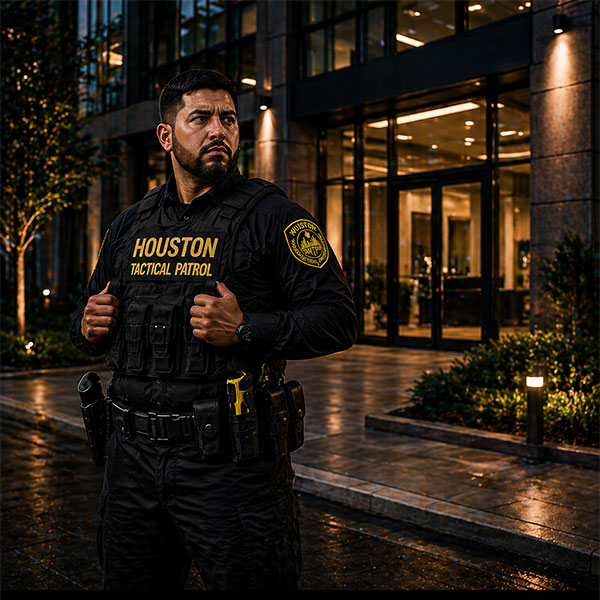
Houston Tactical Patrol LLC works with clients to build coverage around their property conditions, operational hours, and risk concerns. Whether the need is a professional unarmed presence, armed protection, mobile patrols, or temporary fire watch, the focus should remain on dependable coverage and clear accountability.
The Right Level of Protection Is the One You Can Rely On
Choosing between armed and unarmed security guard services is not a checkbox exercise. It is a decision about risk, professionalism, and how your property should respond when something goes wrong. The best security program creates a visible presence before trouble starts, gives your team a clear point of contact, and provides trained support when conditions change.
Start with an honest review of your property’s vulnerabilities, then build coverage that can be maintained consistently. Security should make your operation easier to manage while giving the people on your property a stronger reason to feel safe.