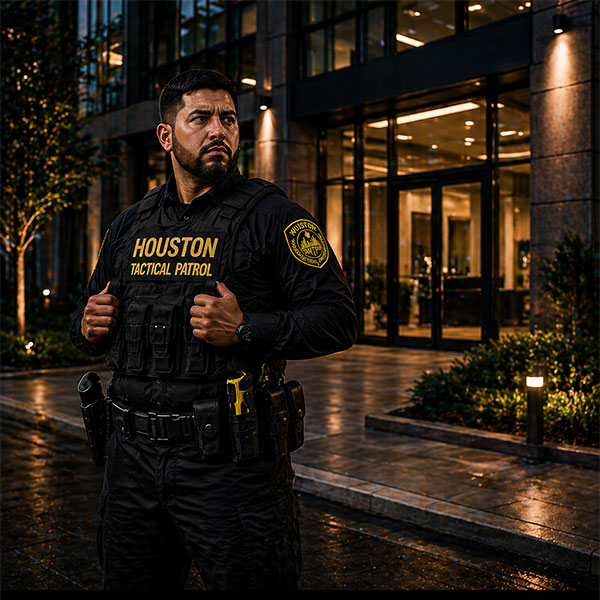
A break-in at a closed retail center rarely happens because a criminal did not see a camera. It happens because the property appeared unobserved, access was easy, and no immediate consequence was expected. An armed patrol comparison helps property decision-makers identify where a visible, mobile armed presence is justified – and where another level of coverage will serve the site better.
The right answer is not automatically armed security. It depends on the type of property, the history of incidents, the hours of exposure, the people on site, and how quickly an officer must be able to respond. A credible security provider should help you make that decision based on the operational reality of the property, not simply sell the highest level of staffing.
Armed Patrol Comparison: What Are You Actually Comparing?
An armed patrol is a licensed officer assigned to conduct scheduled or randomized inspections in a marked or identifiable patrol vehicle. The officer may check gates, perimeter doors, vacant units, parking areas, equipment yards, alarm conditions, and other identified risk points. The officer is not necessarily stationed at one entrance for an entire shift.
That distinction matters. Many clients compare armed patrol service with an armed standing guard, an unarmed patrol, or a police presence as though they perform the same role. They do not.
An armed standing guard provides continuous observation at a fixed location. This can be appropriate for controlled access points, high-traffic lobbies, active construction entrances, or sites where every person entering must be screened or documented. The trade-off is cost: continuous coverage requires a dedicated officer for the full assignment.
An unarmed patrol provides mobile visibility, inspections, reporting, and a professional response to many common issues, including trespassing, unsecured doors, parking violations, and suspicious activity. It is often a sound fit for lower-risk locations where deterrence and accountability are the primary goals.
An armed patrol adds a higher level of capability for properties with meaningful exposure to violent confrontations, theft of high-value assets, repeat criminal activity, isolated overnight conditions, or personnel who may face direct threats. The firearm is not the service itself. The service is trained, licensed security coverage delivered with sound judgment, clear procedures, and appropriate escalation.
Police officers serve a different function. Law enforcement has statutory authority and remains the proper resource for emergencies and criminal incidents requiring immediate police intervention. Private security can observe, deter, document, protect a site, and contact law enforcement quickly. It should never be presented as a substitute for police response.
Compare Coverage Before Comparing Hourly Rates
A lower hourly rate can become expensive when coverage does not match the risk. A patrol that visits only once during the highest-risk overnight window may not address a site where theft attempts occur repeatedly between midnight and 4 a.m. Conversely, assigning a full-time armed officer to a low-incident office complex may consume budget that would be more effective across several patrol checks, access improvements, and monitoring.
Start with the exposure that needs to be controlled. A warehouse with loaded trailers may need perimeter checks, trailer-seal verification, gate inspections, and a documented response to after-hours movement. An apartment community may need parking-lot visibility, amenity checks, response to resident concerns, and consistent documentation of trespass activity. A construction site may need equipment-yard checks, material protection, and immediate attention to fence breaches.
Then consider the coverage pattern. Scheduled patrols provide predictability and documented consistency. Randomized patrols make it harder for offenders to learn when the property is unattended. Many sites benefit from a combination: required checks at critical times, supported by varied arrival times during the rest of the shift.
A quality proposal should identify patrol frequency, expected inspection points, reporting requirements, escalation procedures, and the limits of the assignment. If those details are vague, the comparison is incomplete regardless of price.
Deterrence, Response, and Presence
Visible deterrence is one of the strongest reasons to use patrol security. A marked unit entering a property, an officer checking a gate, and documented activity around vulnerable areas change the perception that a site is easy to target. For commercial properties, this can reduce the opportunity for casual trespassing, dumping, vandalism, and opportunistic theft.
Armed patrols may create a stronger deterrent at properties where criminal activity is persistent or where the assets involved are particularly attractive. Yet visibility must be paired with professional conduct. An officer who is inconsistent, poorly uniformed, difficult to reach, or unfamiliar with the property can undermine the very confidence the service is meant to provide.
Response expectations also need to be realistic. A dedicated guard on site can respond within the property immediately. A mobile patrol officer responds based on their assigned route, the nature of the call, and current conditions. For a site that requires instant access control intervention every time an alarm activates, a standing officer may be the better choice. For a portfolio of sites that needs regular checks and dispatch support, unit patrol may offer broader protection for the investment.
When an Armed Patrol Is Usually the Better Fit
Armed coverage deserves serious consideration when the risk includes more than property damage. This may include recurring confrontations with aggressive trespassers, theft involving valuable inventory or equipment, cash-handling exposure, remote facilities with limited natural surveillance, or events where a visible security posture is needed to protect guests and staff.
It can also fit sites that have experienced a change in risk. A previously quiet shopping center may see a pattern of overnight vehicle burglaries. A construction project may begin storing copper, tools, generators, or fuel on site. A residential community may face repeated unauthorized entry through a damaged gate. Security needs should change when conditions change.
That said, an armed assignment is not a shortcut for poor site controls. Broken fencing, failed lighting, unsecured keys, blind camera areas, and unclear tenant procedures create vulnerabilities that no patrol officer can fully solve alone. Armed patrol works best as part of a practical security plan, not as the only control in place.
Licensing, Training, and Accountability Matter
The comparison should not stop at whether an officer carries a firearm. Ask whether the company and officers are properly licensed for the work, how assignment-specific training is handled, how supervisors review performance, and how incidents are reported to the client.
For Texas properties, clients should expect a provider to operate within applicable Texas licensing requirements and to staff assignments with officers qualified for their designated role. The provider should also have clear standards for communication, use of force, report writing, radio procedures, emergency escalation, and client notification.
Accountability is especially important for mobile service. You should know when patrols occurred, what the officer observed, whether doors and gates were secure, and what actions were taken when something was wrong. Timely reports give property managers a record to review, help identify recurring issues, and support decisions about maintenance, tenant communication, or police follow-up.
Houston Tactical Patrol LLC approaches patrol planning with this operational focus: define the risks, establish the post orders, staff the assignment appropriately, and maintain dependable communication with the client. Security management should reduce uncertainty, not add another vendor problem to solve.
Cost, Liability, and the Value of the Right Scope
Armed patrol service generally costs more than unarmed coverage because of the qualifications, responsibility, insurance considerations, and training associated with the assignment. But the most useful question is not whether armed patrol is the cheapest option. It is whether the scope is proportionate to the loss exposure and the duty of care expected at the property.
Understaffing can leave high-risk periods uncovered. Overstaffing can strain a budget and make long-term service difficult to sustain. A scalable plan may begin with concentrated overnight armed patrols, then expand to weekend coverage, a dedicated officer, or additional sites if incident patterns justify it.
Clients should also be careful about promises that sound absolute. No security service can guarantee that a crime will never occur. What a disciplined provider can deliver is visible presence, documented inspections, trained judgment, defined procedures, and a faster, more organized response when something does happen.
Questions That Lead to a Better Security Decision
Before choosing a provider or service level, establish what success looks like. It may be fewer trespassing incidents, a secured construction perimeter, documented closing checks, safer parking areas, reduced theft exposure, or a reliable point of contact after hours. Those outcomes determine the assignment design.
Ask how the provider will handle an open gate, a burglary alarm, an aggressive individual, a medical emergency, or an officer who cannot complete a scheduled check. Ask who supervises the assignment, how quickly the client receives reports, and whether the patrol plan can be adjusted after the first month of service. Straight answers to these questions are more valuable than generic assurances.
The best patrol plan is the one your team can rely on at 2 a.m., when a gate alarm sounds or a tenant reports suspicious activity. Choose coverage that reflects the actual risk, insist on clear accountability, and give your property a security presence that people can see and depend on.