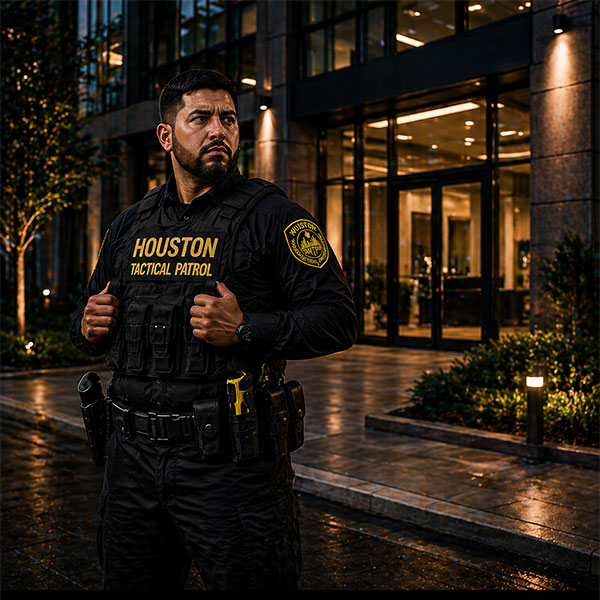
A security plan can look adequate on paper and still leave the wrong entrance, shift, or incident type exposed. An armed officer deployment review examines whether armed coverage is positioned where it can create meaningful deterrence, support a timely response, and protect people without adding unnecessary cost or operational friction.
For property managers, business owners, and event operators, this is not simply a question of how many officers to schedule. It is a practical review of risk, officer responsibilities, site layout, hours of operation, and the standards that govern armed security work. The goal is to place qualified personnel where they are needed most and give them clear direction once they arrive.
What an Armed Officer Deployment Review Should Answer
The first question is straightforward: what specific risk is the armed assignment intended to address? A high-value construction site facing repeated after-hours theft has different needs than a residential community dealing with unauthorized access, or a hospitality venue managing late-night disturbances. Armed coverage should be based on documented conditions, not a generic assumption that more visible security always means better protection.
A complete review identifies the areas where risk concentrates. That may include loading docks, leasing offices, parking areas, gatehouses, inventory rooms, equipment yards, cash-handling locations, or event entry points. It also identifies the times when those areas are most vulnerable. Many incidents occur during shift changes, closing periods, weekends, or overnight hours when normal staff presence drops.
The review should also define what the officer is expected to do. Visible patrol, access control, alarm response, welfare checks, incident reporting, and coordination with law enforcement are all distinct responsibilities. When post orders are vague, officers may be present but not focused on the work that matters most to the client.
Risk Determines the Right Level of Coverage
An armed officer is not the right answer for every site or every post. In some environments, a professional unarmed officer, marked patrol unit, improved lighting, controlled access, or camera monitoring may address the concern effectively. In others, the nature of the threat, the value of assets, the history of incidents, or the potential for violent confrontation can justify armed staffing.
This decision requires balance. Armed personnel provide a strong visible deterrent and can be appropriate where a higher level of readiness is necessary. At the same time, their assignment must be deliberate. Clients should understand the role, the limits of authority, the escalation expectations, and how officers will interact with employees, visitors, tenants, and the public.
A deployment review should examine incident reports, calls for service, trespassing patterns, loss history, employee concerns, and known access-control gaps. Even when a site has not experienced a major incident, recurring signs of vulnerability matter. A broken gate, unsecured contractor access, poor parking lot visibility, or frequent loitering can become a larger problem when no one owns the response.
Review the Site Before Setting the Schedule
The physical environment determines whether an officer can effectively observe, deter, and respond. A guard positioned inside a lobby may be highly visible to visitors but unable to monitor a remote parking area. A patrol route that appears efficient may miss the exterior door most often used for unauthorized entry.
Start with the property boundary and work inward. Review vehicle entrances, pedestrian gates, fencing, lighting, blind spots, emergency exits, delivery areas, stairwells, elevator lobbies, and locations where staff work alone. For multi-building properties, consider travel time between structures and whether a single officer can realistically cover all required points during a shift.
For events, the site review should account for crowd flow. Entrances, credential checkpoints, stage access, alcohol service areas, parking lots, and exit routes may all require different officer positions. A deployment plan that works during guest arrival may not be appropriate during closing, when traffic patterns and tensions can change quickly.
Match Staffing to the Operating Reality
Coverage should reflect what actually happens at the property, not only what is listed in a contract. A warehouse may need heightened coverage when shipments arrive. An apartment community may need more visible patrol during evening resident activity. A retail center may need officers near closing time and during holiday traffic. A construction site may be most exposed after crews leave and equipment is unattended.
This is where scheduling decisions become more precise. Rather than deploying the same assignment every day, a client may benefit from focused coverage during higher-risk windows and mobile patrol checks when the threat is lower. The right approach depends on the site, available budget, response expectations, and the consequences of a security failure.
Staffing continuity also matters. Officers who understand a property’s rules, recurring concerns, emergency contacts, and usual activity can identify abnormal behavior faster. Frequent turnover or last-minute substitutions can create knowledge gaps unless the security provider maintains disciplined shift briefings and reliable documentation.
Post Orders Must Be Specific and Usable
Post orders turn a staffing plan into an operational plan. They should give officers clear direction without forcing them to interpret every situation from scratch. Useful post orders identify patrol expectations, restricted areas, access procedures, reporting requirements, emergency contacts, prohibited conduct, and client-specific priorities.
They should also address what happens when an officer encounters a problem. For example, officers need to know who may authorize access after hours, when to notify site management, when to call emergency services, and how to preserve information following an incident. The best instructions are practical enough to use during a real shift, not buried in a binder that no one references.
For armed assignments, post orders should reinforce professional conduct, de-escalation, communication, and compliance with applicable laws and company policy. Armed officers are not a substitute for law enforcement, and their responsibilities must be defined accordingly. Clear expectations protect the client, the public, the officer, and the security provider.
Accountability Is Part of Deployment
A deployment plan should make performance visible. That means confirming that officers arrive on time, complete assigned patrols, document incidents accurately, and communicate concerns before they become emergencies. Daily activity reports, patrol verification, supervisor check-ins, and incident documentation give clients a clearer picture of what is happening on their property.
Reports should be useful, not just frequent. A note that says “all clear” offers little value if an exterior gate was left open, a light was out, or unauthorized vehicles were observed repeatedly. Good reporting identifies conditions that need correction and gives management a record of how the site was protected.
Clients should also establish a regular review cadence. A monthly or quarterly check-in can reveal whether the assignment is still aligned with current conditions. A new tenant, construction phase, seasonal increase in traffic, recent incident, or change in operating hours may require a staffing adjustment.
Questions Decision-Makers Should Ask
Before approving or renewing an armed assignment, decision-makers should be able to answer several practical questions. Are officers licensed and qualified for the role? Is the assignment based on a documented risk assessment? Are posts and patrol routes tied to actual vulnerabilities? Does the schedule cover the hours when incidents are most likely? Are post orders current and understood? Is there a clear process for reporting, escalation, and supervisory oversight?
It is also reasonable to ask whether armed deployment is the most efficient use of the security budget. A layered plan may provide better results than relying on one fixed post. For example, an armed officer at a critical entry point may work alongside mobile patrols, access-control improvements, monitoring, and targeted lighting upgrades. Security is strongest when personnel, procedures, and property conditions support one another.
Houston Tactical Patrol LLC approaches staffing with the understanding that every property has different exposure, operating demands, and expectations. The right deployment should feel organized to the client and visible to anyone considering a crime, trespass, or disruption.
An armed officer deployment review is most valuable before a serious incident forces the issue. Walk the property, examine the patterns, clarify the assignment, and make sure the people responsible for protection have the position, information, and support needed to do their job well.