A broken gate at 2:00 a.m., unfamiliar vehicles circling the lot, package theft in a mailroom, or repeated trespassing near vacant units can quickly become more than a property-management headache. They can affect resident confidence, leasing performance, staff safety, and liability. So, do apartment complexes need security? Many do, but the right answer depends on the property’s risks, layout, resident expectations, and ability to respond when an issue develops.
Security is not a one-size-fits-all expense. For some communities, occasional mobile patrols and stronger access procedures may be appropriate. For others, especially properties with recurring incidents or large footprints, staffed officers can provide the visible presence and immediate response that management teams need.
Do Apartment Complexes Need Security for Every Property?
Not every apartment community requires a full-time security officer at every entrance. A smaller, well-maintained property with limited access points, low incident history, and an engaged onsite team may need a lighter coverage plan than a large multifamily community with open parking, multiple buildings, amenities, and overnight activity.
The better question is whether the property has security gaps that management cannot reasonably address alone. Leasing teams are there to serve residents, manage operations, and maintain occupancy. Maintenance personnel have critical responsibilities of their own. Neither should be expected to confront trespassers, investigate disturbances, monitor access points, or handle tense situations without proper training and support.
Security becomes especially valuable when problems occur after office hours. Most property teams do not have staff available around the clock, yet many incidents happen at night, on weekends, and during holidays. A trained officer or patrol unit provides a defined response presence during the periods when the property is otherwise most vulnerable.
Signs Your Community May Need Professional Coverage
Apartment managers should look beyond a single major incident. Repeated smaller problems often show that a property needs a more structured security plan. Common warning signs include recurring vehicle break-ins, package theft, trespassing, unauthorized use of amenities, vandalism, noise complaints that escalate, and reports of suspicious activity.
Access control issues also deserve close attention. Gates, key fobs, call boxes, cameras, and locks are useful tools, but they are not a complete security program on their own. A gate can be tailgated. A camera can record an incident without stopping it. A resident can prop open a door for convenience. Security personnel add the human presence needed to observe, deter, document, and respond.
Property layout matters as well. Communities with detached garages, expansive parking lots, dimly lit walkways, secluded stairwells, vacant units, construction areas, or multiple entry points typically have more opportunities for unauthorized activity. These conditions do not guarantee crime, but they can make response slower and oversight more difficult.
Resident feedback is another meaningful indicator. If residents regularly mention feeling unsafe in parking areas, seeing nonresidents on the property, or avoiding amenities after dark, management should treat those concerns seriously. Perception affects retention. Residents want to know the community has a clear plan when something does not look right.
What Apartment Security Actually Does
Effective apartment security is not simply standing at a gate or making occasional rounds. Its value comes from consistent, professional presence and defined responsibilities. Officers can patrol parking lots and common areas, monitor entrances, check perimeter conditions, enforce community rules within their assigned scope, document incidents, and contact law enforcement or emergency services when necessary.
Visible patrols can discourage opportunistic behavior. Someone considering vehicle burglary, vandalism, or unauthorized entry is more likely to move on when they see marked patrol activity, an alert officer, or regular checks of vulnerable areas. Deterrence is difficult to measure incident by incident, but it is one of the primary reasons communities invest in security.
Security personnel also give residents and property staff a clear point of contact during non-emergency concerns. That does not mean officers replace police or act outside their authority. It means the property has trained personnel who can assess a situation, maintain order, preserve documentation, and escalate appropriately.
For management, detailed activity reports can be just as useful as the patrol itself. Reliable reporting helps identify repeated problem areas, time patterns, access failures, and policy issues. Those records can support operational decisions, resident communications, vendor coordination, and insurance or incident-response documentation.
Choosing Between Patrols and Dedicated Officers
The right service model should match the property, rather than forcing the property into a standard package.
Mobile patrol services are often a practical choice for communities that need a visible but flexible presence. A patrol officer can make scheduled or randomized visits, inspect high-risk areas, check gates and doors, address suspicious activity, and document conditions. This model can be cost-effective for properties with lower incident volume or targeted overnight concerns.
Dedicated onsite officers are better suited to communities that need continuous coverage during specific hours or around the clock. A stationed officer can manage access points, maintain a consistent presence around amenities, respond quickly to calls, and become familiar with the property’s routines and recurring concerns. This approach is often appropriate for larger communities, properties with active nightlife nearby, or locations with persistent security issues.
Armed versus unarmed coverage requires careful judgment. Armed officers may be appropriate for higher-risk environments, but an armed presence is not automatically the best answer for every residential community. The decision should reflect the property’s risk assessment, client expectations, local conditions, and the security provider’s licensing, training, policies, and supervision. For many apartment complexes, professional unarmed officers and patrol units provide the deterrence and service level needed without creating an unnecessarily aggressive atmosphere.
Security Should Support the Resident Experience
A capable officer should strengthen a community’s professionalism, not make residents feel as though they live in a restricted facility. The best apartment security is alert, courteous, and approachable while remaining firm about safety concerns and property rules.
That balance matters at the front gate, in shared amenities, and during resident interactions. Officers should understand how to communicate calmly, observe without escalating routine situations, and handle reports with discretion. They also need clear post orders that define patrol routes, escalation procedures, restricted areas, reporting expectations, and coordination with onsite management.
Poorly defined security assignments can create frustration. If residents do not know how to contact security, if officers lack direction, or if management and the provider do not communicate, coverage may feel inconsistent. A professional security plan should establish who handles what, when law enforcement is called, how incidents are documented, and how the property receives reports.
Build Security Into Daily Property Operations
Security works best when it is part of the property’s operating plan, not a reaction after a serious incident. Start by reviewing the past six to twelve months of calls, complaints, damage reports, trespass incidents, and resident concerns. Look for patterns by location, time of day, and type of incident.
Then assess physical conditions. Lighting, fencing, gate performance, camera placement, landscaping, building signage, vacant-unit controls, and package procedures all influence risk. A patrol officer can be more effective when the property’s physical security measures are maintained and management responds quickly to identified issues.
Management should also set realistic goals. The purpose may be to reduce unauthorized parking, improve overnight visibility, deter vehicle crime, support a troubled access point, or give residents a safer way to report concerns. Clear goals make it easier to determine the right schedule, officer type, and reporting requirements.
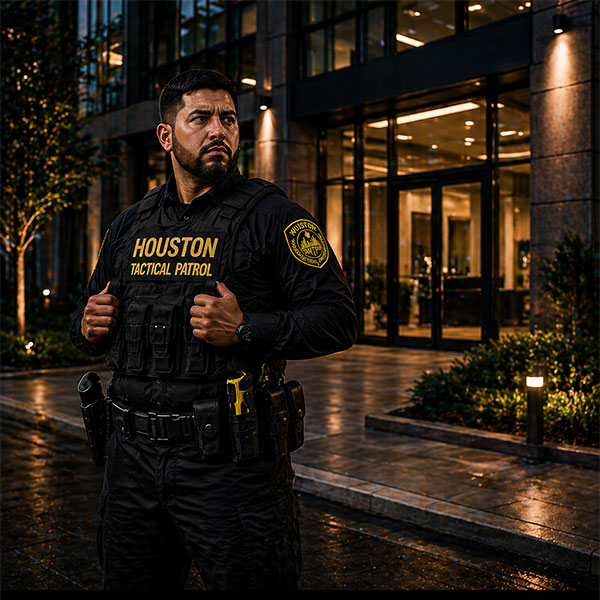
In Houston and other busy Texas markets, apartment communities often face different risks from one neighborhood to the next. A customized assessment is more useful than copying another property’s staffing plan. Houston Tactical Patrol LLC can help property decision-makers develop guard or patrol coverage around the conditions they actually manage.
Questions to Ask Before Hiring Apartment Security
Before selecting a provider, ask how officers are licensed, trained, supervised, and scheduled. Confirm whether the company can scale coverage if an incident, vacancy period, construction project, or special event creates a temporary need. Ask what reports you will receive, how concerns are escalated, and who is available after hours.
It is also wise to discuss officer fit. Residential assignments require personnel who can stay observant during routine patrols, communicate professionally with residents, and follow property-specific procedures. Reliability matters as much as visibility. A post left uncovered or a patrol completed inconsistently can create the exact gap the service was meant to solve.
Apartment security is most effective when it gives managers more control without adding more work to their day. The goal is not to over-secure a community. It is to put the right people, procedures, and presence in place so residents feel protected and staff have support when a situation requires more than a routine maintenance call.