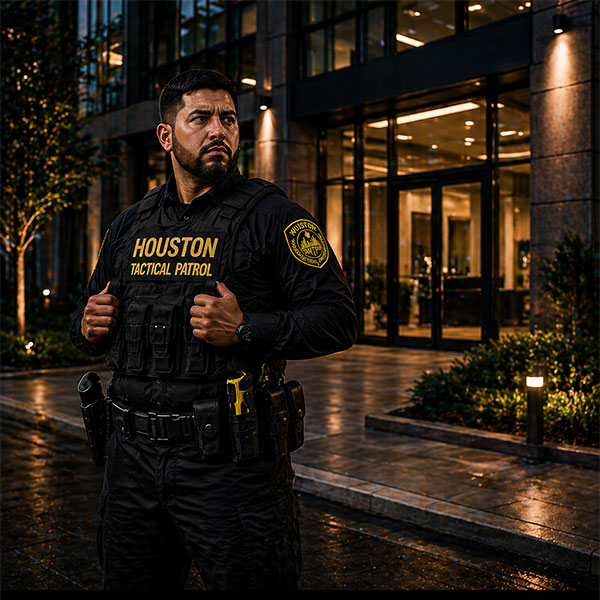
A broken gate, an unlocked side door, a car circling the lot after closing – most business security problems do not start as major incidents. They start as small gaps in visibility, response, and control. Security patrol services for businesses are designed to close those gaps before they turn into theft, vandalism, trespassing, or liability issues.
For business owners and property managers, patrol coverage is not just about having a security presence on site. It is about creating a visible deterrent, documenting activity, checking vulnerable areas, and making sure someone trained is actively watching the property when your staff cannot. That matters whether you manage a retail center, office building, apartment community, industrial yard, hotel, construction site, or event venue.
What security patrol services for businesses actually do
Patrol services are often misunderstood as simply driving by a property or making occasional rounds. Effective patrol coverage is more structured than that. It typically includes scheduled or randomized property checks, monitoring of doors and gates, observation of parking lots and common areas, incident reporting, and fast response to suspicious activity or site issues.
The value comes from motion and visibility. A stationary guard has a role, especially at entrances or access points, but patrol units cover more ground. They can check dark corners, perimeter fencing, loading zones, stairwells, detached buildings, and after-hours activity that can easily go unnoticed.
For some businesses, foot patrol is the right fit because it gives officers a closer view of interior and exterior conditions. For larger properties, vehicle patrol is often more practical because it improves coverage speed and supports broader perimeter checks. In some settings, a mixed approach works best.
Why businesses choose patrol coverage instead of only alarms or cameras
Cameras and alarm systems are useful, but they do not replace a trained security presence. A camera can record a break-in. An alarm can notify someone after a breach. A patrol officer can spot the problem early, intervene when appropriate, and escalate quickly when a situation needs law enforcement or emergency response.
That difference matters in real operating conditions. If a back gate is forced open at 2:00 a.m., a camera may capture it, but that does not stop someone from entering the property. If an officer on patrol identifies the breach during a round, the response can begin immediately. The same applies to loitering, attempted vehicle break-ins, vandalism, and unauthorized access.
There is also a customer and tenant confidence factor. Visible patrols send a clear message that the property is actively managed. For commercial tenants, employees, visitors, and residents, that can improve the sense of safety and reduce complaints about after-hours activity.
Where security patrol services for businesses make the biggest impact
Patrol services are especially useful in environments where risk changes throughout the day or where coverage needs extend beyond a single lobby desk. Shopping centers, office parks, warehouses, mixed-use developments, medical buildings, and construction sites often benefit from patrol-based security because risk is spread across multiple access points.
For retail and commercial properties, patrols help address shop perimeter checks, parking lot monitoring, suspicious persons, and after-hours lockup concerns. For industrial and construction sites, the focus may shift to equipment protection, perimeter integrity, material theft prevention, and weekend or overnight monitoring. In residential communities, patrols often support gate checks, amenity oversight, parking enforcement, and response to disturbances.
Events are another strong use case. A patrol presence can help manage crowd flow, parking areas, entry lines, and perimeter monitoring without creating unnecessary friction for guests. The right officer presence feels controlled and professional, not disruptive.
The real benefits go beyond crime prevention
Most buyers start by looking at patrol services as a way to prevent theft or trespassing. Those are valid concerns, but the operational benefit is often broader. Patrol coverage can reduce management burden by giving business owners and site teams a dependable point of contact for after-hours issues. If an alarm activates, a gate is left open, or a suspicious vehicle is reported, there is already a response process in place.
That reliability matters when your internal team is stretched thin. Property managers cannot be on site at all hours. Owners should not have to handle middle-of-the-night calls personally. Patrol services create accountability by putting trained personnel in the field with defined responsibilities, documented observations, and escalation procedures.
There is also a liability angle. A visible, professional security presence can support safer premises, quicker incident handling, and stronger documentation if something does occur. It does not eliminate risk entirely, and no honest provider should suggest otherwise, but it can materially reduce exposure when the service is well matched to the property.
How to tell what level of patrol coverage you need
This is where it depends. Not every property needs the same patrol frequency, officer type, or schedule. A small office building with low evening traffic may only need periodic after-hours checks. A large apartment complex, hotel, or logistics yard may require nightly patrols, weekend coverage, or a combination of standing guard and mobile patrol.
The right scope usually comes down to five factors: property size, hours of operation, incident history, public access, and asset value. A site with repeated trespassing complaints needs a different plan than one with occasional lockup concerns. A business with expensive tools, vehicles, or inventory exposed outdoors has more to protect than a site with limited after-hours risk.
Decision-makers should also look at what kind of presence is most useful. If the main issue is perimeter awareness and response, mobile patrol may be the better choice. If the property needs face-to-face interaction at a post, access control, or a constant visual presence in one area, a dedicated officer may be more effective. In many cases, the best plan is layered.
What to look for in a patrol provider
Not all patrol services are equal, and the lowest price is rarely the safest decision. Businesses should look for a provider that is properly licensed, clearly managed, and able to explain how the patrol program will actually work on the ground.
That includes officer training, reporting standards, communication procedures, and response expectations. Ask how rounds are documented, how incidents are escalated, and how the company handles schedule consistency. A provider should be able to describe the difference between visible deterrence and actual coverage discipline. Both matter, but one without the other can leave blind spots.
Professionalism also matters more than many buyers expect. Officers represent your property to tenants, customers, staff, and visitors. They need to be alert, respectful, and capable of handling routine interactions without creating unnecessary tension. That is especially important in mixed-use, hospitality, retail, and residential settings where security presence must feel controlled and appropriate.
In Texas, licensing and compliance should never be treated as optional details. A qualified security partner should be straightforward about credentials, staffing standards, and operational oversight. If a company is vague about those basics, that is a warning sign.
Common mistakes businesses make when hiring patrol services
One common mistake is buying too little coverage for the actual risk. If incidents are happening during overnight hours across a wide property, a minimal drive-through schedule may not solve the problem. Another is assuming technology alone is enough. Cameras help, but they work best when paired with people who can respond.
Some businesses also wait too long. They call for patrol support only after repeated theft, vandalism, or tenant complaints. By that point, the cost of inaction may already be higher than the cost of a preventative security plan.
The other mistake is choosing a provider based on promises instead of process. A professional security company should be able to build a plan around your property, not force your property into a generic package. Houston Tactical Patrol LLC positions patrol services that way – around the site, the schedule, and the actual risk profile.
Why patrol services work best when they are customized
Security is rarely one-size-fits-all. A shopping center with evening foot traffic has a different patrol need than a construction site with expensive equipment and no overnight staff. A residential community may need a patrol strategy that balances deterrence with resident comfort. A warehouse may prioritize perimeter checks, gate security, and fast incident response.
That is why the best patrol service plans are built around property-specific realities. The schedule, officer type, reporting expectations, and post orders should reflect the environment. Good security planning is practical. It accounts for the layout, the traffic patterns, the recurring problems, and the business goals.
If you are evaluating patrol coverage, the right question is not simply whether your business needs security. It is whether your property would be safer, easier to manage, and better protected with trained personnel actively checking the areas where risk tends to show up first. For many businesses, the answer becomes obvious once those gaps are named clearly.