A vacant construction site at 2:00 a.m. does not need the same protection as a packed event venue on a Saturday night. That is why understanding the different types of security guard services matters before you hire coverage. The right security setup can reduce theft, discourage trespassing, improve response times, and take pressure off your staff. The wrong one can leave gaps that cost you money, time, and credibility.
For property managers, business owners, and event operators, security is rarely one-size-fits-all. Coverage depends on the hours you operate, the type of visitors you receive, the layout of the site, and the level of risk you need to control. Some locations need a visible officer posted at an entrance. Others need mobile patrols, overnight fire watch, or a mix of on-site staff and remote monitoring.
Why the types of security guard services matter
Security works best when the service matches the actual risk. A low-traffic office building may only need evening lock-up checks and occasional patrols. A high-theft retail site may need a uniformed officer during business hours and after-hours patrol support. An apartment complex may need a presence that balances deterrence with customer service.
Choosing the wrong level of coverage usually creates one of two problems. You either under-protect the property and deal with preventable incidents, or you overstaff in ways that do not make financial sense. A good security plan finds the middle ground – strong enough to protect people and property, but practical enough to sustain.
1. Unarmed security guard services
Unarmed officers are one of the most common and flexible options. They provide a visible presence, monitor activity, control access, document incidents, and help enforce site rules. In many commercial properties, residential communities, schools, office buildings, and retail locations, that visible deterrent alone goes a long way.
This type of coverage is often the right fit when the goal is prevention, observation, and professional site management rather than a higher-force response posture. Unarmed officers are especially useful in places where staff, tenants, guests, or customers expect a welcoming but controlled environment.
That said, unarmed coverage is not ideal for every site. If a property has repeated violent incidents, high-value assets, or elevated after-hours criminal activity, decision-makers may need a stronger security posture.
2. Armed security guard services
Armed officers are typically assigned to higher-risk environments where the threat level, asset value, or client requirements call for an elevated level of protection. Banks, dispensaries, high-value logistics operations, sensitive facilities, and certain executive protection assignments often fall into this category.
The benefit of armed security is not only the weapon. It is the training, judgment, and command presence that come with the role when the provider is hiring qualified personnel and maintaining proper licensing. For some businesses, armed coverage also sends a clear message that the property takes security seriously.
The trade-off is that armed services are not appropriate everywhere. Some environments need a softer public-facing presence. Others may have insurance, legal, or tenant-relations considerations that make armed staffing less desirable. The right choice depends on both risk and setting.
3. Mobile patrol services
Not every property needs a guard stationed in one place all night. Mobile patrol services are designed for larger areas, multiple access points, scattered assets, or lower-traffic properties that still need regular security checks. Patrol units can inspect doors and gates, look for suspicious activity, verify that common areas are secure, and respond quickly when something appears off.
This option is often cost-effective for parking lots, business parks, warehouses, construction sites, schools after hours, and residential communities. It gives clients a visible deterrent without the cost of full-time stationary staffing at every location.
Mobile patrol works best when the provider uses clear reporting, reliable schedules, and responsive dispatch support. Random drive-throughs alone are not enough. Clients need documented activity and a service model built around accountability.
4. Standing guard or on-site posted officers
A posted officer remains on-site for a dedicated shift or around the clock, depending on the assignment. This is the right fit when a property needs continuous presence, faster on-site response, and direct interaction with employees, residents, vendors, or visitors.
Posted officers are commonly used at office buildings, apartment communities, hotels, industrial sites, medical facilities, and front-gate entrances. Their role may include badge checks, visitor screening, patrols, incident reporting, escort services, and de-escalation when issues arise.
Compared with mobile patrol, on-site staffing offers more continuity and better familiarity with the property. The officer learns normal patterns, notices irregular behavior faster, and often becomes a steady point of contact for management. The cost is higher, but so is the level of direct coverage.
5. Event security services
Event security is its own category because the pace, crowd behavior, and liability concerns are different from day-to-day property protection. Concerts, festivals, private functions, corporate gatherings, sports events, and public-facing community events all require security planning that accounts for access control, crowd flow, restricted areas, parking, and emergency response.
In these settings, officers may check credentials, monitor entry points, manage lines, patrol perimeters, respond to disturbances, and coordinate with venue staff. The best event security teams know how to stay visible and in control without escalating the tone of the event.
This service is highly situational. A private business mixer and a large outdoor festival may both need event security, but the staffing plan, post orders, and risk profile will be completely different.
6. Fire watch services
Fire watch is often needed when a fire alarm, sprinkler system, or other life-safety equipment is out of service. In many cases, building owners or managers need immediate coverage to stay compliant and protect occupants until the issue is fixed.
Fire watch personnel are responsible for staying alert to signs of smoke, fire, unsafe conditions, and evacuation issues. They maintain patrol logs, monitor designated areas, and report concerns quickly according to site requirements and local expectations.
This is one of the clearest examples of why specialized security matters. A standard patrol routine is not the same as a fire watch assignment. The objectives, documentation, and urgency are different, and the provider needs to understand that from the start.
7. Residential and community security services
Residential communities face a different mix of issues than commercial sites. The biggest concerns are often unauthorized entry, vehicle break-ins, package theft, amenity misuse, loitering, and resident safety concerns after hours. In those environments, security has to balance vigilance with professionalism.
Community security may include gatehouse staffing, roving patrols, parking enforcement support, incident response, and rule enforcement in common areas. For HOAs, multifamily properties, and gated neighborhoods, the right officer presence can improve both safety and resident confidence.
It also helps when officers understand that they are representing the property every time they speak with a resident or visitor. Professionalism matters just as much as visibility.
8. Industry-specific security guard services
Some sites need coverage tailored to a specific industry rather than a general guard model. Construction security focuses heavily on theft prevention, perimeter checks, and after-hours site protection. Hospitality security may emphasize guest interaction, access control, and quick issue resolution. Corporate sites may prioritize lobby control, visitor management, and employee safety protocols.
There are also assignments where golf cart patrols, 24/7 monitoring support, or mixed-service models make more sense than a traditional single-post guard plan. This is where customization becomes valuable. The best security programs are built around how the property actually operates, not around a generic staffing package.
How to choose between different types of security guard services
The right service starts with a practical assessment of risk. Ask what problems you are trying to prevent, when incidents are most likely to happen, and whether the site needs constant presence or scheduled checks. Think about public access, lighting, layout, tenant expectations, and whether your team needs officers who can interact directly with customers or residents.
Budget matters, but it should not be the only factor. A lower-cost option that leaves key vulnerabilities exposed can become more expensive once losses, damage, or tenant complaints start adding up. On the other hand, not every property needs the highest level of coverage available.
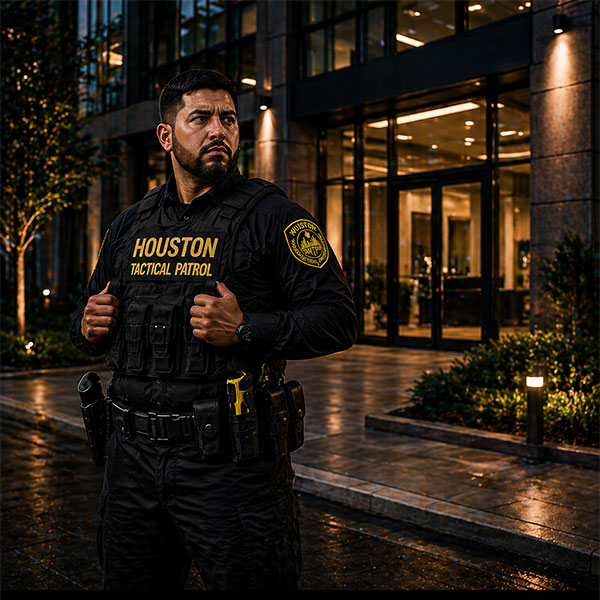
It also helps to ask how the provider manages reporting, supervision, scheduling, and emergency response. A security company should make operations easier, not harder. For many Texas clients, that means working with a licensed, responsive partner that can scale service up or down as needs change. That operating mindset is a big reason companies turn to providers like Houston Tactical Patrol LLC for tailored guard and patrol coverage.
One service rarely solves everything
Many properties need a combination of services rather than a single security format. An apartment community might use gate officers during peak hours and mobile patrol overnight. A commercial facility might need unarmed lobby coverage during the day and armed protection after hours. A construction site may rely on patrol services most of the week, then add fire watch when systems are down.
That is usually the smartest approach. Security is strongest when coverage reflects the real conditions on-site, not a standard package copied from another property.
If you are evaluating the types of security guard services for your business, property, or event, start with your actual exposure points. The right plan should feel clear, manageable, and built around the way your site runs every day.