The gates are scheduled to open in 45 minutes, vendors are still arriving, and a line is forming outside. That is not the time to decide who is watching the entrance, where guests should park, or how your team will respond to an incident. Knowing how to plan event security means making those decisions early, putting clear responsibilities in place, and ensuring every part of the venue has appropriate coverage.
Whether you are operating a private party, concert, corporate gathering, festival, sporting event, or community function, event security should be built around the actual risks of that event. A small indoor fundraiser and a large outdoor event with alcohol, multiple entrances, and late-night traffic need very different plans. The goal is not to overstaff every event. It is to create visible, professional coverage that protects people, property, and operations without making the guest experience feel restrictive.
Start With a Realistic Risk Assessment
Security planning starts with the event itself, not a standard guard count. Review the venue layout, expected attendance, event hours, guest profile, parking conditions, alcohol service, cash handling, valuable equipment, and the surrounding area. Each detail can change the level and type of coverage required.
A daytime business conference may need professional access control, lobby coverage, and parking observation. A late-night event may require stronger entry screening, active perimeter patrols, parking lot visibility, and a more defined plan for handling disorderly conduct. If the venue has several entrances, loading docks, backstage areas, or restricted rooms, those areas need to be included in the coverage plan rather than addressed only after a problem occurs.
Consider prior incidents as well. Theft, gate-crashing, disputes, vehicle break-ins, trespassing, or crowd-management concerns are useful planning information. They do not guarantee the same issue will happen again, but they help identify where deterrence and quick response matter most.
How to Plan Event Security Around People and Movement
Attendance numbers alone do not determine staffing. The more useful question is how people will enter, move through, and leave the event. A venue with 300 guests arriving in a 20-minute window can require more entry coverage than a larger event with staggered arrivals. Likewise, a single exit can become a concern when the event ends and guests leave at once.
Map the guest journey from arrival through departure. Security personnel should have clear assignments for entry points, credential checks, restricted-access areas, high-traffic zones, parking areas, and exits. A visible officer near an entrance can discourage unauthorized entry, but that post cannot also monitor a distant parking area or respond to an issue inside the venue. Coverage must account for these competing responsibilities.
Staffing decisions should also reflect the role each officer will perform. Some posts require customer-facing professionalism, such as greeting guests, verifying credentials, and providing directions. Others call for active observation, patrol presence, or controlled access to sensitive areas. Assigning personnel according to the post helps security remain both effective and professional.
Armed or unarmed coverage is a decision that depends on the event’s risk profile, client requirements, venue rules, and applicable regulations. For many events, trained unarmed officers provide the right level of visible deterrence and access control. Higher-risk environments may call for armed personnel, but that decision should be made carefully with a licensed security provider and a clear operational purpose.
Build Access Control Before Guests Arrive
Many event problems begin at the entrance. Unclear ticket procedures, poorly marked entry points, staff credentials that are easy to copy, and unmonitored side doors can create avoidable gaps. A good access-control plan defines who may enter, where they may enter, and how personnel will confirm authorization.
Keep public entrances separate from vendor, staff, performer, and delivery access whenever possible. If the site cannot support separate entrances, establish time windows and procedures that prevent loading activity from mixing with guest arrival. This reduces confusion and gives security a better view of who belongs on site.
Restricted areas should be clearly identified before the event begins. Backstage spaces, offices, cash rooms, equipment storage, alcohol storage, and private meeting rooms should not rely on informal verbal instructions alone. Security officers need a current list of authorized personnel, a way to verify credentials, and a defined process for addressing unauthorized access.
Physical details matter. Check gates, door hardware, lighting, fencing, signage, camera coverage, and emergency exits during the walkthrough. An exit must remain available for emergency use, but it should not become an unattended path for unauthorized entry. If a location has a weak point, address it with staffing, barriers, lighting, or a changed traffic flow before guests arrive.
Establish One Communication Plan
Security teams need a reliable way to communicate with each other and with event leadership. Radios are useful, but radios alone are not a communication plan. Before the event, identify who is in charge, how officers will report incidents, what information should be shared immediately, and when the event organizer should be notified.
Use plain, consistent language. Officers should know how to report the location, nature of the issue, people involved, and whether additional support is needed. They should also know which incidents require emergency services and who is responsible for making that call.
A short pre-event briefing is one of the highest-value parts of the plan. Review posts, shift times, access procedures, emergency exits, medical resources, parking concerns, weather conditions, and the chain of command. Confirm contact information for the venue manager, event organizer, facilities representative, and emergency contacts. If an instruction changes during the event, communicate it to every affected post rather than assuming the message will travel on its own.
Prepare for Emergencies Without Creating Panic
A practical event security plan accounts for medical emergencies, severe weather, fire alarms, lost children, intoxicated guests, fights, suspicious activity, and evacuation needs. The right response varies by venue and event type, but uncertainty should not be part of it.
Identify first-aid resources, emergency exits, assembly areas, and access routes for police, fire, and EMS. Keep those routes clear throughout the event. For outdoor events in Houston and across Texas, weather planning deserves special attention. Heat, lightning, high winds, and sudden storms can change operations quickly, particularly where tents, stages, generators, or large crowds are involved.
Security personnel should focus on maintaining order, guiding guests, protecting access points, and supporting emergency responders. They should not be expected to operate outside their training or authority. Clear coordination with venue staff and public safety agencies helps prevent well-intended actions from complicating an emergency.
Manage Parking, Perimeter, and Closing Time
The security plan should extend beyond the front door. Parking lots and exterior areas are common locations for theft, vehicle break-ins, disputes, and unauthorized access. Visible patrols, adequate lighting, controlled vehicle access, and a clear pickup or rideshare plan can reduce exposure before and after the event.
Closing time deserves its own plan. Guests often leave in groups, vendors begin breaking down equipment, and staff may be handling cash or valuable property. Security coverage should remain in place until the site is cleared, restricted areas are secured, and the final walkthrough is complete. Reducing coverage too early can leave the event exposed during one of its most vulnerable periods.
Work With a Security Partner That Plans With You
A security company should not simply provide a number of officers and arrive at call time. Ask how the provider evaluates risk, assigns posts, supervises personnel, handles communication, documents incidents, and responds when staffing needs change. You need officers who can represent your event professionally while remaining alert and ready to act.
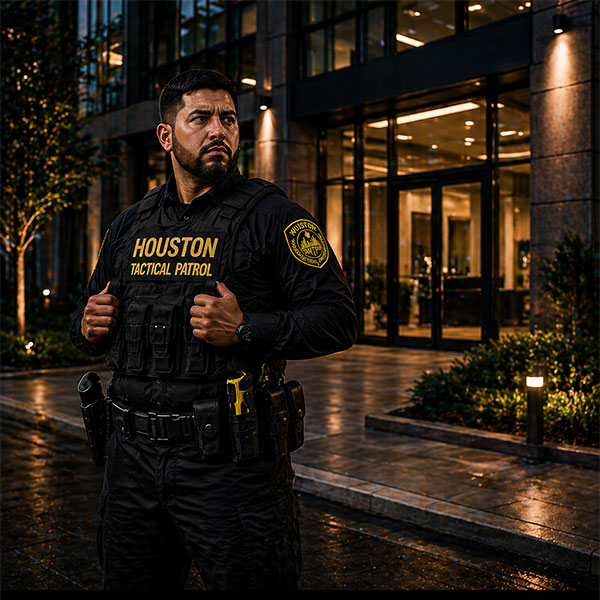
Houston Tactical Patrol works with event operators to build coverage around venue conditions, guest flow, operating hours, and specific concerns. The right plan can scale from a focused entry-control assignment to multi-post coverage with patrol support, depending on what the event requires.
The strongest event security plans are usually the ones guests barely notice. People see organized entry, professional personnel, clear direction, and a calm response when something changes. That confidence comes from planning before the first guest arrives – and keeping protection in place until the final vehicle leaves.