A loading dock door propped open at 2:15 a.m. can become a loss, a liability issue, or a false alarm depending on how quickly someone sees it and knows what to do next. Remote monitoring gives property owners and managers a practical way to keep eyes on critical areas when an onsite officer is not stationed there. It does not replace every security need, but it can close costly gaps between patrol checks, business hours, and emergency response.
For commercial properties, residential communities, construction sites, and event venues, the value is not simply having cameras. The value is having a defined process for detecting activity, verifying what is happening, documenting the incident, and escalating it to the right person or responder.
What Remote Monitoring Does for a Property
Remote monitoring is the active observation of security cameras, alarms, access points, or other connected systems from an offsite location. Depending on the setup, trained personnel may review live feeds, respond to alarm activations, assess suspicious activity, issue audio warnings, notify property contacts, or request law enforcement assistance when appropriate.
This differs from standard video surveillance. Cameras that only record footage can be useful after an incident, but they do not necessarily prevent one. A recorded break-in may support an investigation or insurance claim, yet it does little to stop a trespasser from entering the property in the first place. Active oversight creates the opportunity for earlier intervention.
That distinction matters most after hours. Retail centers, offices, warehouses, multifamily communities, and job sites often have long periods with limited staff present. Those are the hours when unauthorized entry, vandalism, theft, and safety concerns can go unnoticed. Monitoring extends awareness beyond a manager’s phone or a security guard’s scheduled patrol route.
Where Monitoring Delivers the Most Value
The strongest monitoring plans focus on locations with repeatable risks and clear response requirements. A construction site may need attention on equipment gates, material storage, fuel tanks, and temporary access points. A residential community may prioritize pool entrances, package areas, garages, and perimeter gates. A warehouse may focus on docks, employee entrances, trailer yards, and restricted inventory areas.
For many Houston-area properties, weather and operating schedules also shape the plan. Heavy rain can affect visibility and access control. Large sites may have blind areas that are difficult to cover with a single fixed camera. Late-night deliveries, contractors, and maintenance crews can create legitimate activity that looks suspicious without a current access list or site instructions.
A monitoring provider needs more than camera views to make good decisions. The team should understand which areas are restricted, who is authorized to be present, what conditions require immediate escalation, and who has decision-making authority after hours. Without those details, every alert becomes either a guess or an unnecessary call to the client.
Remote Monitoring Works Best With a Response Plan
Seeing an incident is only the first step. The real question is what happens next.
A practical response plan identifies the order of action for different situations. For example, an observer may verify the camera view, check whether the person or vehicle is authorized, use a speaker warning if available, contact the designated property representative, dispatch a patrol unit, or call emergency services. The correct sequence depends on the threat, the location, and the client’s instructions.
Not every event requires the same response. A delivery driver at the wrong entrance may need direction. A person attempting to force a gate may require immediate escalation. A fire alarm, water leak, or medical emergency calls for a different process entirely. Clear escalation procedures reduce delays and help avoid overreacting to routine activity.
This is where monitored technology and physical security personnel complement each other. Monitoring can identify an issue quickly and provide information before a patrol officer arrives. A mobile patrol officer can then inspect the location, secure a door, speak with individuals onsite, preserve a visible security presence, and provide a detailed report. For high-risk locations, an onsite officer may still be the right choice because immediate human presence is the priority.
Cameras Alone Are Not a Complete Security Program
Security cameras are valuable, but they have limitations. Poor placement, weak lighting, dirty lenses, unreliable internet service, and outdated equipment can reduce their usefulness at the exact moment they are needed. A camera aimed at a gate may show that it opened, but not who opened it or whether the person entered an adjacent restricted area.
Before relying on remote monitoring, property leaders should review the physical environment. Are cameras positioned to capture faces, license plates, entry points, and high-value assets? Is there sufficient lighting after dark? Are trees, signage, parked vehicles, or building changes blocking the view? Does the site have backup power or a plan for network outages?
Access control also matters. If employees, vendors, residents, and contractors share codes or prop doors open, no camera program can fully correct the underlying issue. Monitoring should support disciplined access practices, not compensate for them indefinitely.
Building a Monitoring Plan That Fits Your Site
A good plan begins with a property assessment, not a generic equipment package. The goal is to identify where the risk is, when it occurs, and what response will make a measurable difference.
Start by reviewing recent incidents, near misses, tenant complaints, and areas where staff feel vulnerable. Look at patterns: repeated trespassing near a back fence, frequent parking garage damage, package theft near a lobby, or equipment loss from a job site. These details help determine whether the property needs active camera oversight, scheduled vehicle patrols, fixed guard coverage, improved lighting, or a combination of services.
Next, establish operating instructions that are specific enough to be useful at 3:00 a.m. The instructions should identify emergency contacts, approved vendors, restricted zones, gate and key procedures, alarm protocols, and the circumstances that require dispatch or law enforcement notification. They should also be updated when tenants change, construction phases shift, or special events alter normal site traffic.
Finally, require reporting that helps management make decisions. Useful reports record the time, location, observed activity, response taken, and outcome. Over time, this documentation can reveal whether an issue is isolated or recurring. It can also support conversations with insurers, tenants, owners, and law enforcement when needed.
Choosing the Right Level of Coverage
Remote monitoring is often a cost-effective way to extend security coverage, especially for properties that do not need a full-time officer at every hour. It can improve awareness across multiple locations and direct patrol resources toward verified concerns instead of random checks alone.
Still, it is not the answer for every environment. A property with frequent confrontations, controlled entry requirements, high-value inventory, or active public traffic may need a visible onsite officer. A large event may require trained personnel at entrances, parking areas, and crowd-control points. In those cases, monitoring can support the operation, but it should not be treated as a substitute for qualified security staffing.
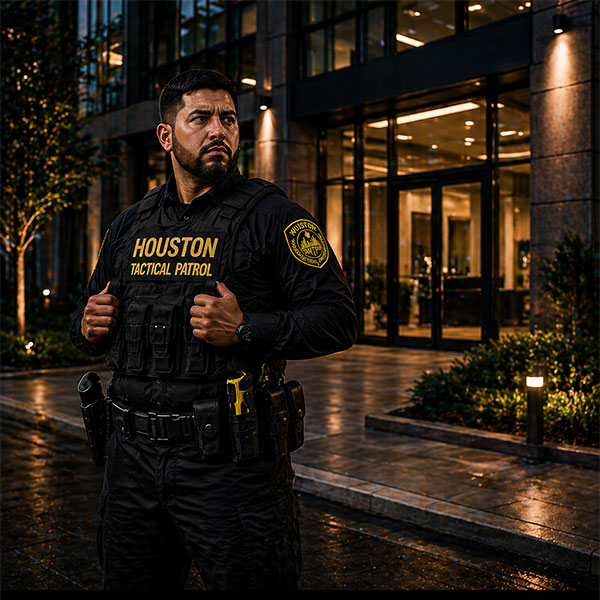
The right approach depends on the property’s risk profile, hours of operation, layout, budget, and tolerance for response time. Houston Tactical Patrol LLC can help clients evaluate how 24/7 monitoring, patrol services, and onsite officers can work together without adding unnecessary complexity.
A stronger security program begins with a simple question: when something happens after hours, who will see it, who will decide what it means, and who will act? A clear answer gives property managers more control when it matters most.