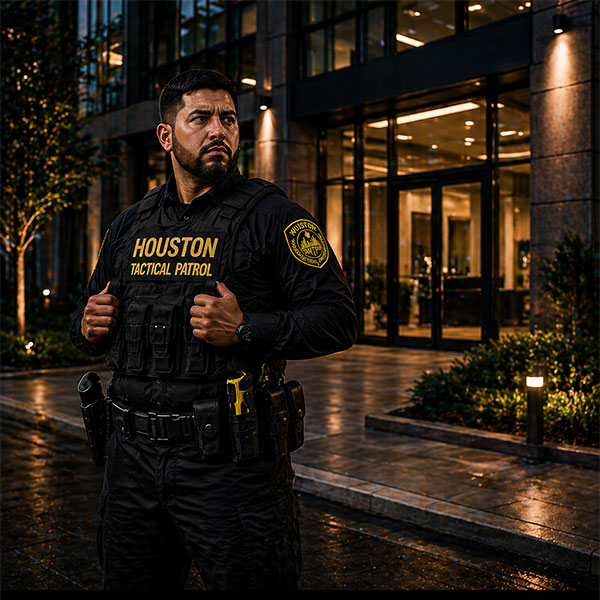
A retailer can replace stolen merchandise. It is much harder to replace an employee who quits after repeated threats, a customer who stops visiting because the parking lot feels unsafe, or a manager who spends every shift reacting instead of operating the store. This retail theft reduction case study examines a representative retail security scenario and the practical measures that changed the daily risk picture.
The scenario is based on common conditions faced by independent stores, shopping centers, and multi-location operators: repeat shoplifting, organized theft activity, after-hours trespassing, and inconsistent incident documentation. It is not a promise that every property will achieve identical results. Retail theft patterns, store layout, hours, staffing levels, and local conditions all affect the right security plan.
The Property: Theft Was Becoming an Operating Problem
The subject property was a busy retail location with extended evening hours, several customer entrances, a rear receiving area, and a parking lot shared with neighboring businesses. Managers had noticed a pattern. Known offenders tested employees during busy periods, merchandise disappeared from vulnerable displays, and staff were increasingly reluctant to confront suspicious behavior.
The concern was not limited to inventory loss. Employees were spending time watching doors rather than serving customers. Managers received incomplete reports after incidents, making it difficult to identify repeat patterns or explain the issue to ownership. After closing, loitering near the storefront and receiving area created another layer of risk.
The initial response had been familiar: add cameras, remind staff to be alert, and call law enforcement when a major incident occurred. Cameras provided evidence, but they did not consistently prevent theft in the moment. Staff awareness helped, but store employees were not hired or trained to take on security duties. The property needed visible, professional coverage with a clear chain of response.
Retail Theft Reduction Case Study: The Security Plan
The security plan started with a site assessment rather than a generic guard assignment. The goal was to identify when theft occurred, where offenders entered and exited, which areas had poor visibility, and what responsibilities belonged to store staff versus trained security personnel.
A blended approach was selected. During the highest-risk operating hours, a uniformed security officer was positioned inside and near the main entrance. The officer maintained a professional presence, greeted customers, watched for behavioral indicators, and remained available to assist management when concerns developed. That visible presence served as a deterrent without turning the store into an unwelcoming environment.
Outside those hours, marked patrol checks focused on the parking area, storefront, rear access points, and receiving zone. Patrol timing varied instead of following a predictable routine. This mattered because predictable coverage can be easy for repeat offenders to work around.
The plan also set boundaries. Security personnel were not instructed to chase every suspected shoplifter or take unnecessary physical risks over merchandise. Their role was to observe, deter, document, communicate with management, and respond within training, company policy, and applicable law. When an incident required law enforcement involvement, the officer preserved useful details such as descriptions, direction of travel, vehicle information when available, and video time frames.
Adjusting the Store Environment
Security coverage is most effective when the physical environment supports it. During the assessment, management addressed several conditions that made theft easier: obstructed sightlines near high-value merchandise, an unsecured rear-door practice during deliveries, and a poorly defined employee-only area.
The improvements were straightforward. Merchandise placement was adjusted so employees and the officer could maintain better observation. Rear access procedures were tightened, with delivery activity coordinated through designated personnel. Signage and access expectations were clarified. The goal was not to inconvenience legitimate customers or staff. It was to remove easy opportunities and establish consistent control of the property.
This is a key trade-off for retail operators. Excessive restrictions can hurt customer experience and slow operations. Too little control invites avoidable loss. The best plan applies stronger measures to genuinely vulnerable areas while keeping the sales floor open, professional, and customer-focused.
Giving Employees a Better Reporting Process
Employees were given a simple, repeatable process for reporting suspicious behavior and incidents. They did not need to make accusations, attempt a detention, or decide whether someone met a legal threshold for theft. They were asked to notify the security officer or manager, provide observable facts, and avoid escalating the situation.
That distinction changed reporting quality. Instead of vague comments such as “someone looked suspicious,” staff could report that a person had repeatedly entered a restricted area, removed security packaging, coordinated with another individual, or left through a specific exit. Better observations gave management and security personnel a more reliable foundation for action.
At the end of each shift, incident reports captured the time, location, behavior, response, and any follow-up needed. Reports also recorded non-criminal concerns, including damaged locks, lighting outages, aggressive panhandling, and recurring trespass activity. Small issues often become larger vulnerabilities when they are not documented and corrected.
What Changed After Coverage Began
The first change was visibility. Employees knew who to contact when concerns arose, and customers saw a professional security presence at the property. Management no longer relied solely on busy store associates to monitor entrances, parking areas, and rear access.
The second change was consistency. Patrol activity, officer observations, and manager follow-up created a clearer picture of where and when risk was occurring. Repeated activity could be identified rather than treated as isolated events. That allowed management to adjust staffing, merchandise placement, and closing procedures based on actual conditions.
The third change was response discipline. Not every incident ended in an arrest, and theft prevention should not be judged by arrests alone. A strong retail security program reduces opportunities, discourages repeat activity, helps staff respond safely, and creates usable documentation when law enforcement or insurance reporting is necessary.
For this type of property, the most meaningful performance indicators included:
- Reported theft and attempted-theft incidents by day and time
- Repeat trespass, loitering, and suspicious-activity contacts
- Rear-door and access-control exceptions
- Employee safety concerns and manager response time
These measures should be reviewed over time, not after a single quiet week. Seasonal shopping, promotions, staffing changes, nearby construction, and local crime trends can affect the numbers. A one-month decline may be encouraging, but a sustained pattern across several reporting periods provides a better basis for decisions.
Why the Approach Worked
The plan worked because it combined deterrence with operational follow-through. A uniformed officer alone can discourage opportunistic theft, but visibility has greater value when it is paired with patrol coverage, clear access procedures, accurate reporting, and management involvement.
It also treated retail theft as a property-wide issue. Risk did not begin and end at the register. It included the loading area, employee entrances, parking lot, closing routine, merchandise layout, and the confidence of the people working on site. Addressing only one part of that system would have left gaps elsewhere.
Most importantly, the approach gave employees a security resource without asking them to become security professionals. Staff could focus on customers and operations while trained personnel handled observation, deterrence, documentation, and escalation decisions.
Applying This Case Study to Your Property
A retail operation does not always need the same level of coverage. A small store may benefit most from evening patrol checks and targeted weekend officer coverage. A high-traffic location with repeat incidents may need a dedicated officer during open hours. A shopping center may require patrol units that can cover parking, common areas, and multiple tenants while reporting issues to property management.
Before selecting coverage, review when loss occurs, which entrances create exposure, whether employees feel safe reporting concerns, and how quickly management receives incident information. A security provider should be able to build coverage around those answers, not force every property into the same schedule.
Houston Tactical Patrol LLC provides customized guard and patrol coverage designed to create visible deterrence, support safer operations, and reduce the management burden that comes with recurring security concerns. The right plan begins with the actual conditions on your property and remains flexible as those conditions change.
Retail theft reduction is not one dramatic intervention. It is the daily practice of making theft harder, response faster, reporting clearer, and employees more confident that someone trained is ready to act.