A suspicious person testing an unlocked rear door at closing time, repeated shoplifting near a blind aisle, or an employee left alone during a late shift can expose a retail operation quickly. Retail security upgrades address these daily vulnerabilities with practical layers of protection that deter crime, improve accountability, and give staff a clear path to follow when something does not look right.
For store owners and property managers, the right improvements are rarely about buying the most equipment. They are about understanding where loss, safety concerns, and access failures occur, then matching each risk with coverage that employees can use and customers can understand.
Start With the Risks at Your Store
Retail theft does not look the same at every location. A convenience store may face late-night loitering, cash-handling concerns, and aggressive behavior. A shopping center tenant may be more concerned with organized retail theft, after-hours break-ins, or damage in shared parking areas. A warehouse-style retailer may need stronger receiving-door controls and employee access procedures.
Before approving upgrades, walk the property as a person looking for an easy opportunity would. Check entrances, exits, loading areas, stockrooms, restrooms, parking lots, dumpster enclosures, roof access points, and areas where merchandise is difficult for employees to see. Review incident reports, inventory shortages, employee concerns, and the times of day when issues happen most often.
This assessment matters because a camera in the wrong place or a guard posted only during low-risk hours can create a false sense of security. The goal is to close meaningful gaps without adding unnecessary cost or disruption to the business.
Improve Visibility Inside and Outside
Poor visibility gives theft and misconduct room to develop. A well-lit, orderly store signals that the property is actively managed. It also helps employees, security personnel, and surveillance systems identify activity before it becomes a larger problem.
Start with lighting. Entrances, sidewalks, employee parking, delivery zones, cart corrals, and rear doors should be clearly visible after dark. Replace burned-out fixtures promptly and address shadows created by landscaping, signs, or building features. Lighting should support cameras, but it should also help staff safely escort customers or coworkers to their vehicles when needed.
Inside the store, review sightlines from registers, customer service areas, and staff workstations. Tall displays, cluttered aisles, poorly placed promotional racks, and unsecured high-value merchandise can all create concealment opportunities. Store layout changes may be enough to improve observation in some areas. In higher-risk zones, locked cases, product tethering, or controlled display methods may be appropriate.
There is a trade-off. Excessive barriers can make a store feel unwelcoming and slow down legitimate sales. Reserve the strongest physical controls for products with a documented loss history, then reassess whether the controls are working.
Make Cameras Part of an Active Security Plan
Surveillance cameras are most effective when someone knows what they cover, how long footage is retained, and who is responsible for reviewing it after an incident. A camera system should cover entrances and exits, registers, high-value merchandise, stockrooms, receiving areas, and exterior access points. Images should be clear enough to support identification, not merely show that someone was present.
Placement is more important than camera count. A camera pointed at a doorway may document a person entering, but a second angle may be needed to capture their face, direction of travel, or vehicle information. Exterior cameras should account for changing light conditions, weather, and glare from nearby headlights.
Set written procedures for footage requests and incident preservation. If a theft, assault, slip-and-fall claim, or property damage event occurs, staff should know who can secure the video before it is overwritten. Managers should also verify that cameras are functioning, clean, properly aimed, and recording as expected.
Remote monitoring can add another layer when the location is closed or lightly staffed. However, monitoring does not replace an on-site response plan. If an operator sees forced entry, trespassing, or a developing disturbance, the property still needs clear escalation procedures and a reliable response option.
Strengthen Access Control and Closing Procedures
Many serious retail losses begin at doors that should have been secured. Rear entrances, receiving doors, stockroom exits, gates, and employee-only areas need disciplined access rules. Keys that have been copied, shared, or never recovered from former employees create a quiet but significant exposure.
Access control upgrades may include rekeying locks, using coded credentials, maintaining a key log, installing door alarms, and limiting access to sensitive areas based on job duties. A smaller store may only need a controlled key process and better door hardware. A multi-location operation may benefit from electronic access records that show who entered a restricted area and when.
Closing procedures deserve the same attention. Employees should not be expected to lock up alone if the location has a history of after-hours concerns. A consistent close should include checking restrooms and fitting rooms, securing cash and high-value merchandise, inspecting rear doors, confirming alarm status, and having a safe plan for employees walking to their cars.
Add a Visible Human Presence Where It Counts
Technology can document and alert, but trained security personnel can observe behavior, enforce property rules, assist employees, and respond in real time. For many retail sites, a professional security presence is the upgrade that connects cameras, access control, and store procedures into one practical operation.
An unarmed officer may be appropriate for customer-facing locations that need a professional, approachable presence, routine patrols, and support with trespassing or policy enforcement. Armed officers may be considered when the risk profile involves high-value inventory, repeated violent incidents, cash-intensive operations, or other credible threats. The appropriate choice depends on the property, operating hours, local conditions, and the client’s risk tolerance.
Mobile patrol service can be a strong fit for locations that do not require a full-time officer. Randomized patrol checks can inspect doors, deter loitering, document suspicious activity, and provide visible coverage during evenings, weekends, or overnight hours. For a shopping center or a business with multiple nearby locations, this approach can provide meaningful deterrence while controlling staffing costs.
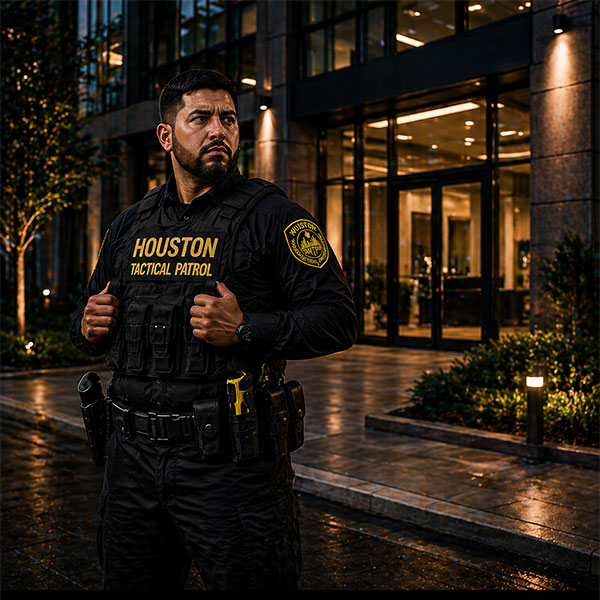
Houston Tactical Patrol LLC helps retail clients build coverage around their actual operating conditions, whether that means a standing officer at peak hours, scheduled patrol checks after closing, or a more complete security staffing plan.
Train Employees for Safe, Consistent Response
Employees are often the first people to notice a suspicious return, concealed merchandise, a person watching staff routines, or someone trying to enter a restricted area. They need practical direction, not a vague instruction to be more careful.
Training should explain how to recognize concerns, whom to notify, what information to document, and when to step away and call for help. It should also establish clear boundaries. Employees should not be pressured to physically confront suspected thieves or place themselves in danger to protect merchandise.
A good reporting process captures useful details: time, location, description, direction of travel, vehicle information when safely observed, merchandise involved, and available video coverage. Consistent reports help management identify patterns that may not be obvious from a single incident.
Security officers and store leadership should also agree on escalation procedures before an event occurs. That includes when to contact management, when to call law enforcement, how to handle trespass warnings, and how to preserve evidence. Clear roles reduce confusion during stressful situations.
Measure Whether the Upgrades Are Working
Security investments should be reviewed like any other operational decision. Compare inventory shrink trends, incident reports, false alarm activity, response times, employee feedback, and customer complaints before and after changes are made. A reduction in reported incidents may indicate improvement, but it can also mean employees have stopped reporting. Look at more than one measure.
If theft shifts from the sales floor to the receiving area, or from daytime to closing hours, adjust the plan rather than assuming the problem is solved. Security is not static. Seasonal traffic, staffing changes, construction nearby, neighborhood activity, and new product lines can all alter a location’s risk level.
Build Security Around Daily Operations
The strongest retail security upgrades support the way a store actually operates. They make it easier to spot problems, protect staff, control access, and respond with confidence without turning every customer interaction into a security event. Start with the gaps that create the greatest exposure, assign ownership for each procedure, and choose protection that your team can maintain consistently.