A broken gate at 2:15 a.m., an unfamiliar vehicle circling the lot, or a package theft near the leasing office can quickly change how residents feel about their community. The best patrol strategies for apartments do more than place an officer on site. They create a visible, consistent security presence that identifies concerns early, discourages unwanted activity, and gives property management a clear record of what happened.
For apartment managers, the right approach depends on the property layout, resident profile, crime trends, staffing budget, and hours of greatest exposure. A patrol plan for a gated garden-style community should not look exactly like coverage for a mid-rise building with a parking garage. The goal is the same: protect people, property, and access points without making the community feel unwelcoming.
Start With the Property’s Real Risk Pattern
Effective patrol begins before the first shift. Management and security leadership should walk the property together, looking at it as both a resident and a potential offender would. That means reviewing parking areas, mailrooms, vacant units, pool gates, laundry facilities, stairwells, dumpster enclosures, perimeter fencing, and every point where someone can enter or leave without being noticed.
Incident history matters, but it should not be the only guide. A property may have few reported incidents because residents do not report suspicious activity or because theft is discovered days later. Review maintenance concerns, gate repair records, lighting outages, resident complaints, towing patterns, and nearby activity as part of the assessment.
The result should be a practical patrol map with priority zones. High-value or isolated areas need more frequent attention, while lower-risk areas still need periodic checks so the patrol pattern does not become predictable.
Use Unpredictable Routes and Timed Checkpoints
A patrol that follows the same route at the same time every night is easy to avoid. Predictability gives trespassers and thieves information they can use. Strong apartment patrol strategies rotate routes, vary the order of inspections, and change the timing of checks while maintaining reliable coverage of critical areas.
This does not mean random, unfocused movement. Officers should have required checkpoints and documented responsibilities during every shift. The difference is that the sequence changes. One patrol may begin at the rear perimeter and detached garages, while the next starts at the leasing office, package area, and primary gate.
Timed checkpoints also provide accountability. Management should be able to confirm that key locations were inspected, gates were observed, and unusual conditions were reported. Digital reporting tools, scan points, and time-stamped activity logs can support this process, but they do not replace alert officers who know what they are looking for.
Focus on High-Risk Times, Not Just Standard Hours
Many apartment communities benefit from overnight patrols, but the highest-risk period is not always midnight to dawn. Package theft may increase in the afternoon and early evening. Unauthorized pool use and noise complaints may peak on weekends. Vehicle break-ins can rise during particular overnight windows, while move-outs and contractor traffic create access-control concerns during the day.
A useful patrol schedule follows the property’s actual activity. Coverage can be expanded around recurring concerns, holiday weekends, rent-payment periods, unit turns, or known gate failures. For properties with a limited budget, targeted patrol hours often deliver stronger results than a thin presence spread across every hour of the week.
Combine Vehicle Patrols With Foot Patrols
Marked vehicle patrols are highly visible. They help deter unwanted activity in parking lots, along perimeter roads, and at entrances. They also allow an officer to cover larger properties efficiently and respond quickly when a resident, manager, or monitoring center reports an issue.
However, a vehicle cannot see everything. Foot patrols allow officers to inspect stairwells, breezeways, mail areas, courtyards, garages, and narrow spaces between buildings. They make it easier to notice propped doors, damaged locks, suspicious vehicles, unauthorized occupants, and hazards such as poor lighting or blocked walkways.
The best answer is often a combination. An officer may conduct a visible vehicle pass through the property, park near a central area, and complete a foot patrol of selected buildings or common spaces. On a large community, the plan may assign vehicle coverage to outer areas and foot patrols to interior zones. The right balance depends on the size of the site and the issues management needs addressed.
Treat Access Control as a Patrol Responsibility
A gate, door, camera, or fence is only useful when someone notices and acts on failures. Patrol officers should inspect access-control points throughout the shift, not merely drive past them. A gate left open, a pedestrian entry that does not latch, or a damaged section of fencing can turn a controlled community into an easy target.
Officers should document the condition, location, time, and immediate risk of any issue. When possible, they should take reasonable interim steps based on site policy, such as increasing patrol attention around a compromised entrance or notifying property management and maintenance contacts. If the condition creates an immediate safety concern, it needs prompt escalation rather than a note left for the morning.
This is where security and property operations must work together. Patrol staff can identify and report vulnerabilities, but property management must have a clear process for repairs, resident notices, vendor access, and follow-up. Unresolved access-control issues can undermine an otherwise well-run patrol program.
Make Visibility Professional, Not Aggressive
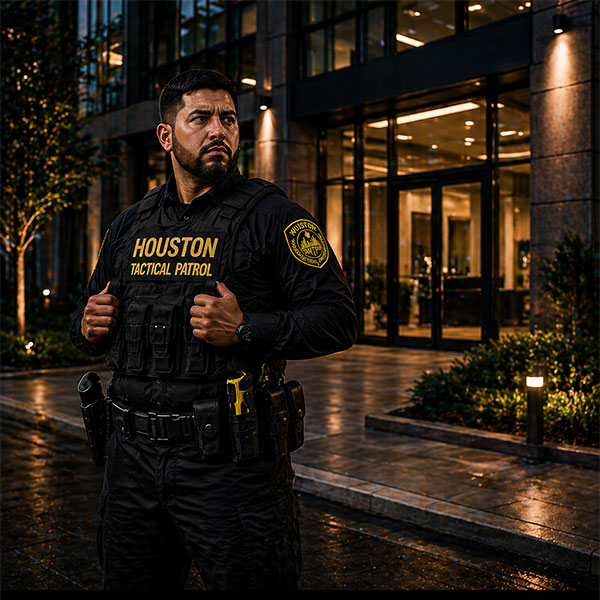
Residents want to see security presence, especially after dark. A professional officer in a marked unit or recognizable uniform reassures residents, deters trespassing, and gives people a clear point of contact when something does not feel right.
Visibility should be balanced with good judgment. Officers should remain approachable, respectful, and aware that apartment communities are homes, not restricted industrial sites. The job includes observing, documenting, enforcing property rules within authority, and contacting law enforcement when a situation requires it. It does not require treating every resident, guest, or delivery driver as a threat.
The choice between armed and unarmed coverage should come from a thoughtful risk assessment. An unarmed officer may be appropriate for routine access monitoring, resident assistance, and visible deterrence. Armed coverage may be considered for properties with elevated threats, repeated violent incidents, or specific operational needs. In Texas, property managers should work with a properly licensed security provider and establish clear post orders for the assignment.
Build Clear Response and Escalation Procedures
Patrol quality is tested when something happens. Officers need written instructions for common events such as suspicious persons, vehicle break-ins, domestic disturbances, fire alarms, gate failures, noise complaints, medical emergencies, and aggressive behavior. A calm, fast, policy-driven response protects residents and reduces confusion for management.
Post orders should define who the officer contacts first, when emergency services are called, what information must be preserved, and how management receives notification. They should also establish limits of authority. Security officers are not a substitute for law enforcement, but trained personnel can observe, deter, preserve a scene, provide useful information, and help direct responders when an incident occurs.
For after-hours properties, a 24/7 communication plan is especially valuable. Management should know who will receive urgent calls, how escalation works if the first contact cannot be reached, and what events require immediate notification. A report delivered the next day is helpful; a timely call during an active incident can be far more valuable.
Demand Detailed, Useful Reporting
A report should help management make decisions, not simply prove that an officer was present. Useful daily activity reports capture patrol times, areas checked, observed conditions, resident contacts, warnings issued, maintenance concerns, and incidents requiring follow-up. Photos can add clarity when documenting damage, lighting failures, illegal dumping, or access-control problems.
The reports should be specific without becoming speculative. “Observed unknown male near Building 8” is weak unless it includes time, behavior, direction of travel, description, officer action, and whether law enforcement or management was notified. Clear facts protect the property, support investigations, and reveal patterns over time.
Management should review reports regularly with the security provider. If the same gate is repeatedly unsecured or the same parking zone generates complaints, the patrol plan needs adjustment. Houston Tactical Patrol LLC can tailor patrol assignments and reporting expectations to the operational needs of apartment communities, rather than forcing every property into one fixed schedule.
Measure Whether the Plan Is Working
A patrol program should not be judged only by whether an officer arrived on time. Look for changes in trespassing reports, vehicle incidents, gate-related complaints, response times, maintenance issue identification, resident feedback, and recurring problem locations. A decline in reported crime can be a positive sign, but it should be considered alongside better reporting and seasonal changes.
Regular site reviews keep the plan current. A newly opened package room, construction project, broken perimeter fence, or change in resident traffic can create new exposure. Patrol coverage should adapt before a minor gap becomes a repeated incident.
The strongest apartment security programs make residents feel that someone is paying attention without disrupting daily life. Start with the risks your property actually faces, hold patrol activity accountable, and keep the plan flexible enough to respond when conditions change.