A break-in, violent threat, or repeated trespassing issue does not arrive on a convenient schedule. For property managers, business owners, and event operators, the real question is not simply whether protection is needed. It is how much does armed security cost, and what level of coverage will actually reduce risk without creating an unmanageable operating expense.
Armed security pricing varies because every site has different exposure, hours, staffing needs, and response expectations. A professional proposal should be clear about what is included, what the officers are responsible for, and how the coverage supports your operation.
How Much Does Armed Security Cost?
In Texas, businesses commonly see armed security billing rates in the range of roughly $35 to $65 or more per hour for a qualified armed officer. Higher-risk assignments, specialized posts, overnight coverage, short-notice requests, major events, and locations that require advanced qualifications can cost more.
That hourly figure is not simply the officer’s pay. It reflects the operational cost of delivering reliable, licensed coverage. A security provider must recruit and retain qualified personnel, maintain licensing and insurance, manage scheduling, supervise performance, provide equipment, and have replacement staff available when an officer cannot report for duty.
For a straightforward example, one armed officer assigned for eight hours per day, five days per week, represents 40 weekly service hours. At a $45 hourly billing rate, that is approximately $1,800 per week before any applicable taxes or added services. Around-the-clock coverage is a much larger commitment: one fixed post operating 24 hours a day, seven days a week requires 168 service hours each week and typically multiple officers to staff it responsibly.
The right question is not whether the lowest hourly quote is available. It is whether the provider can consistently fill the post with trained personnel, document activity, respond to changes, and represent your property professionally.
What Drives the Cost of Armed Guard Coverage?
The most significant pricing factor is the nature of the assignment. An armed officer at a quiet commercial entrance with defined access-control duties has a different risk profile than an officer securing a late-night venue, an active construction site with recurring theft, or a property experiencing threats against staff.
Risk level and officer responsibilities
Posts with a higher likelihood of confrontation generally require more experienced personnel and stronger oversight. Duties may include checking identification, screening visitors, enforcing parking rules, conducting interior and exterior patrols, monitoring cameras, responding to alarms, documenting incidents, and coordinating with law enforcement or emergency services.
A detailed post order protects both the client and the officer. It establishes what the officer is expected to do, when escalation is required, and what conditions should be reported immediately. Clear expectations also make pricing more accurate because the security company can assign the right level of staffing rather than relying on assumptions.
Schedule, minimum hours, and continuity
A single evening shift each week costs less in total dollars than daily coverage, but short shifts may carry a minimum number of billable hours. Security companies need enough time to staff, dispatch, supervise, and relieve an officer appropriately.
Longer assignments can create better planning efficiency, especially when a property needs recurring coverage. However, 24/7 protection should never be treated as one officer working continuously. Dependable coverage requires scheduled relief, days off, shift rotation, and backup personnel. Those staffing realities are a necessary part of maintaining alert, professional coverage.
Location and site conditions
A highly visible location near a major Houston corridor may need officers who can manage frequent public interaction and access points. A remote industrial yard may require more extensive vehicle patrols, gate checks, and after-hours response planning. Large sites with multiple buildings, poor lighting, open perimeters, or several entrances can also require additional time and personnel.
Before quoting a site, a responsible provider should understand the layout, operating hours, known incidents, tenant or guest traffic, and available security infrastructure. Cameras, gates, lighting, key-control procedures, and alarm systems all influence the level of guard coverage needed.
Armed versus unarmed staffing
An armed officer is not automatically the best fit for every assignment. Armed coverage is often appropriate where there is a credible elevated risk, valuable inventory, substantial cash handling, a history of violent incidents, or a need for a stronger visible deterrent.
For many routine duties, such as visitor management, front-desk security, parking oversight, or low-risk patrols, an unarmed officer or marked patrol unit may accomplish the objective at a lower cost. The best security plan matches the service to the threat. Overstaffing can waste money, while understaffing can leave critical gaps.
Costs That Should Be Clear in Your Proposal
A professional security proposal should make it easy to understand the scope of service. The hourly rate matters, but decision-makers should also confirm whether the proposal addresses supervision, reports, patrol tracking, uniforms, vehicles, emergency response procedures, and site-specific instructions.
Ask how the provider handles call-offs and no-shows. A low quote loses its value if an important post is left uncovered. You should also ask whether there is 24/7 management support, who receives incident reports, and how quickly leadership can be reached when conditions change.
Some assignments may require added resources. Examples include a marked vehicle for patrol work, multiple officers for crowd control, a supervisor for a large event, specialized access-control procedures, or coverage during holidays. These are not necessarily hidden costs when they are identified early. They are operational requirements that should be discussed before service begins.
Insurance and licensing also deserve attention. Armed security work carries serious responsibility. Verify that the company is properly licensed for the work it performs and that its personnel meet applicable Texas requirements. A credible provider will be direct about qualifications and will not make unrealistic promises about preventing every incident.
How to Control Costs Without Reducing Protection
The most effective way to manage security spending is to target the hours and locations where risk is highest. A property that experiences theft between midnight and 5 a.m. may not need a full-time armed post during normal business hours. A construction project may need overnight coverage while materials are exposed, then less coverage once the project moves indoors.
Consider a blended approach when it fits the site. An armed officer can cover high-risk times or critical entrances, while unarmed officers, mobile patrols, cameras, lighting improvements, and controlled access support the rest of the operation. This can improve deterrence while keeping the security budget focused on the areas that need it most.
Accurate incident records are equally valuable. If trespassing occurs primarily on weekends, or if a particular loading area is repeatedly targeted, your security plan can be adjusted based on evidence rather than guesswork. Reporting turns a guard assignment into useful operational intelligence.
Choosing a Security Partner Over a Low Quote
Price matters, but armed security is a people-based service. Your officers may be the first people employees, residents, customers, or guests see when they arrive. They need the judgment to remain professional under pressure, communicate clearly, follow site procedures, and take appropriate action when something is wrong.
When comparing proposals, look at more than the rate. Consider the provider’s licensing, supervision model, staffing depth, reporting practices, response availability, experience with properties like yours, and ability to scale when conditions change. A vendor that communicates clearly and fills posts consistently reduces administrative burden for your team.
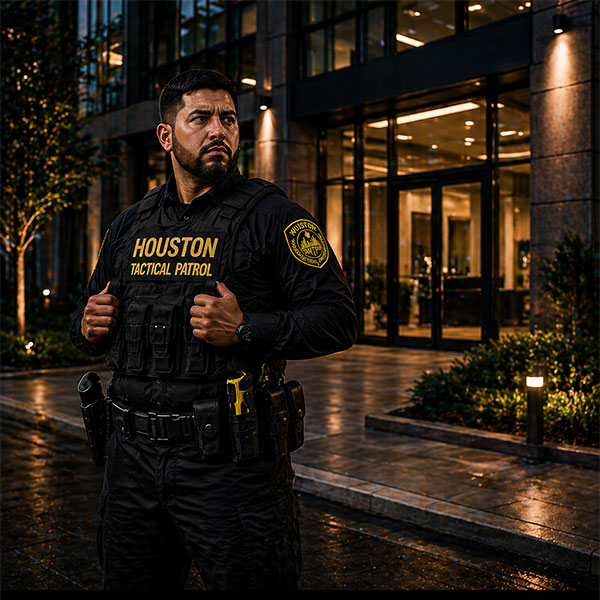
Houston Tactical Patrol LLC builds coverage plans around the conditions clients actually face, from visible armed posts and scheduled patrols to flexible support for events, communities, and commercial properties. The goal is practical protection that is staffed, managed, and ready when your property needs it.
The most useful security investment is not the cheapest shift on paper. It is the coverage that gives your people a safer place to work, your property a stronger visible presence, and your management team confidence that someone capable is on duty when it matters.