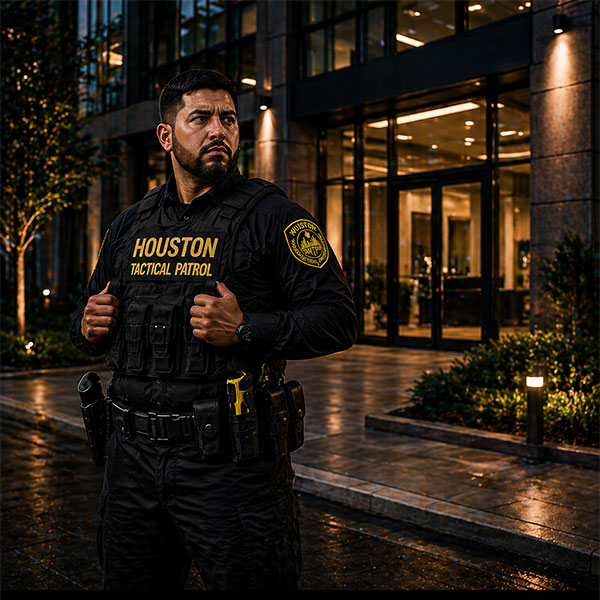
A patrol that arrives at the same time every night can become predictable. A patrol that visits too rarely may not deter anyone at all. Knowing how to choose patrol frequency means finding the coverage level that fits your property’s real exposure, not simply selecting the lowest number of visits or paying for staffing you do not need.
For property managers, business owners, and event operators, the goal is practical: create a visible security presence at the times and locations where it will reduce risk, support a fast response, and give tenants, employees, customers, and visitors confidence.
Start With the Risks on Your Property
Patrol frequency should begin with a straightforward risk review. Every site has different vulnerabilities. A retail center with frequent shoplifting concerns requires a different patrol plan than a construction site protecting equipment after dark. A gated community may need attention at entrances, common areas, and parking lots, while an industrial facility may need perimeter checks, access control verification, and documentation of safety issues.
Look closely at what has happened on the property during the past six to twelve months. Break-ins, trespassing, vehicle burglaries, vandalism, unauthorized access, disturbances, and theft attempts all indicate where patrols should be concentrated. Even incidents that did not result in a loss matter. Repeated loitering near a rear entrance, for example, can show that a weak point is being tested.
Also consider what could happen if the site is left unobserved. A vacant building, a property with expensive tools or inventory, or a community with multiple unmonitored entrances carries greater exposure than a small office that is fully occupied during business hours. The higher the potential loss, disruption, or liability, the more frequent and deliberate the patrol schedule should be.
Match Coverage to Hours of Vulnerability
Most properties are not equally vulnerable around the clock. The best patrol schedule follows the hours when people, assets, or access points need the most protection.
A commercial office may need patrols primarily after employees leave, especially if the parking garage, loading area, or rear doors are exposed. Retail properties often need a visible presence during closing, cash-handling periods, and late-night deliveries. Apartment and HOA communities may benefit from evening and overnight unit patrols, when residents expect quiet, parking areas are full, and unauthorized visitors are harder to identify.
Construction sites are a common example of why timing matters. Daytime patrols may provide little additional value when crews are already present, while evening, overnight, and weekend checks can help deter theft of materials, tools, fuel, and heavy equipment. A fire watch assignment may require continuous observation or scheduled rounds based on the condition of the fire protection system and applicable requirements.
Do not rely only on standard business hours. Review delivery windows, shift changes, special events, school schedules, tenant move-ins, holiday closures, and seasonal activity. A property can be well protected Monday through Thursday and still face its greatest risk on a quiet weekend.
Decide Between Scheduled and Random Patrols
Scheduled patrols create accountability. The client knows when coverage is expected, and a patrol officer can complete defined tasks such as checking doors, inspecting gates, documenting conditions, and confirming that restricted areas remain secure. They work well when a property needs routine checks at fixed intervals.
Randomized patrols add a different kind of protection. When patrol times vary within an agreed coverage window, a trespasser or repeat offender has a harder time identifying a pattern. This approach is especially useful for parking lots, vacant properties, retail centers, storage facilities, and construction sites where predictability can weaken deterrence.
In many cases, the right answer is a combination. A community may request scheduled gate checks at shift changes, along with randomized patrols of amenity areas and parking zones throughout the night. A warehouse can receive regular perimeter inspections plus unscheduled checks near loading docks and equipment storage.
The point is not to make patrol activity confusing for the client. It is to make it difficult for unauthorized people to plan around security coverage while keeping the service measurable and managed.
How to Choose Patrol Frequency by Property Type
There is no universal number of patrols that works for every property. Frequency depends on exposure, traffic, layout, and the consequences of an incident. These starting points can help frame the conversation.
Commercial and Retail Properties
A low-risk office building may only need several after-hours checks each night, focused on entry points, parking areas, and exterior conditions. A retail center with late operating hours, frequent cash transactions, or a history of loitering may need more frequent evening patrols and a visible vehicle presence near storefronts.
If several tenants share a property, the patrol plan should address common areas without overlooking less visible spaces. Rear corridors, dumpster enclosures, loading zones, and side parking areas often deserve as much attention as the main entrance.
Residential Communities
For apartments, condominiums, and HOAs, patrol frequency should reflect resident concerns and community layout. Multiple entrances, open parking, package areas, pools, clubhouses, and mail centers can create several points of exposure. Evening and overnight patrols are often most valuable, but daytime checks may be appropriate where access control, contractor activity, or parking enforcement is a recurring issue.
A patrol officer should be visible without becoming disruptive. Professional interaction, clear documentation, and consistent communication with management are part of effective community coverage.
Construction, Industrial, and Vacant Sites
These properties often need higher-frequency after-hours coverage because they may contain valuable equipment, copper, tools, fuel, building materials, or unsecured access points. A patrol plan should include perimeter checks, gate and fence inspections, equipment areas, temporary offices, and any location where materials can be removed quickly.
For a site with a documented history of theft or repeated breaches, a few brief checks may not be enough. More frequent patrols, longer inspection periods, or a staffed officer during the highest-risk hours may be the better operational decision.
Events and Hospitality Venues
Patrol frequency at an event should follow crowd movement, not a fixed overnight model. Entry lines, parking lots, alcohol service areas, backstage locations, and exits may each require active monitoring at different points. A smaller gathering may need periodic rounds, while a high-attendance event may require continuous officer placement supported by mobile patrol coverage.
Measure More Than the Number of Visits
A patrol schedule is only useful if each visit has a purpose. Ask what officers are expected to inspect, what conditions they should report, who receives incident information, and how urgent issues are escalated. A patrol that only drives through a lot may provide visibility, but it may not identify a broken gate, unsecured door, hazardous condition, or developing disturbance.
Clear post orders turn frequency into accountable service. They should identify patrol zones, required checks, reporting expectations, contact procedures, and response priorities. For properties with recurring issues, patrol officers should know the relevant details, such as vehicles of concern, restricted access times, tenant instructions, or areas with prior incidents.
Documentation also helps refine the schedule. If reports show that suspicious activity clusters between 1:00 a.m. and 3:00 a.m., move additional coverage into that window. If a new access-control system reduces after-hours entries, the patrol plan may be adjusted without reducing protection in other areas.
Balance Security Needs With Budget
Cost matters, but the lowest-frequency plan is not always the least expensive over time. One stolen piece of equipment, a single serious tenant complaint, or repeated property damage can quickly exceed the cost of appropriate patrol coverage. At the same time, paying for continuous staffing at a property that only needs periodic checks can waste resources.
A practical approach is to begin with the coverage needed for the highest-risk periods, then review performance after thirty to sixty days. Patrol reports, incident trends, tenant feedback, and management observations can show whether frequency should increase, decrease, or shift to different hours.
Scalable service is especially useful for properties with changing needs. A center may require added patrols during holiday retail traffic, a community may need temporary coverage after a vehicle burglary trend, and a construction site may need expanded overnight checks during phases when expensive materials arrive.
Review the Plan After Conditions Change
Security needs do not stay fixed. A new tenant, a vacant suite, a perimeter repair, an increase in nearby crime, a major event, or a change in operating hours can all affect the right patrol frequency. Review the plan whenever the property changes, not only when an incident forces the issue.
Houston Tactical Patrol LLC builds patrol plans around the conditions clients actually face, with trained personnel, clear communication, and coverage that can adjust as risk changes. The most effective schedule is one that remains visible, accountable, and difficult to predict when it matters most.
Start with the hours and areas that create the greatest exposure, then let documented activity guide the next adjustment. A patrol plan should give you more than a vehicle passing by. It should give your property a dependable layer of protection when it needs it.