A sold-out venue, a busy parking lot, multiple entry points, and a line forming before doors open can turn a well-planned event into a difficult operation quickly. Event security guard services provide the trained presence needed to manage those pressure points without taking attention away from the guest experience.
For organizers, security is not just about responding when something goes wrong. It is about setting clear boundaries, controlling access, recognizing concerns early, and giving staff, vendors, and attendees confidence that someone is prepared to act. The right coverage helps an event stay organized from setup through teardown.
What Event Security Guard Services Should Accomplish
Effective event security begins with a clear operational purpose. A visible officer at an entrance can deter unauthorized access, but that is only one part of the assignment. Guards may also monitor restricted areas, verify credentials, direct vehicle traffic, patrol parking areas, assist with crowd movement, document incidents, and contact emergency services when needed.
The goal is not to make every gathering feel heavily controlled. The goal is to create a professional, orderly environment where legitimate guests can move freely and potential problems are addressed before they become disruptions. For a corporate event, that may mean discreet lobby coverage and executive access control. For a festival or large public gathering, it may require more visible perimeter patrols, bag-check support, and coordinated entry procedures.
A security plan should also protect the people working behind the scenes. Vendors carrying equipment, event staff handling cash, performers, caterers, and volunteers all benefit from clear access rules and a reliable point of contact if an issue arises.
Start With the Real Risks at Your Event
Security staffing should be based on the event, not a one-size-fits-all guard count. A small private reception has different needs than a concert, sporting event, trade show, apartment community gathering, or grand opening. Attendance is a factor, but it is not the only one.
Consider the venue layout, the number of entrances, alcohol service, cash handling, parking conditions, hours of operation, and whether the event is open to the public. A daytime event in a controlled indoor venue may need focused access coverage. An outdoor event that runs late, uses multiple lots, and brings in a large public crowd may need a broader deployment with mobile patrols and defined response procedures.
The event’s purpose matters as well. High-profile guests, controversial speakers, valuable equipment, ticketed admission, or prior incidents can change the security posture. A qualified security provider should ask practical questions before recommending staffing. If a proposal does not account for your schedule, site map, attendance expectations, and specific concerns, it may not reflect the coverage you actually need.
Visible Deterrence Versus a Low-Profile Presence
There is a trade-off between highly visible security and a more discreet approach. Uniformed officers positioned at entrances and parking areas send a clear message that the property is controlled. That can be valuable where trespassing, theft, fights, or gate-crashing are concerns.
Some settings call for a lower-profile presence. Private business functions, upscale hospitality events, and formal celebrations may need officers who remain approachable and attentive without dominating the atmosphere. Both approaches can work. The decision should reflect the venue, audience, and risk level rather than appearance alone.
Build Coverage Around the Event Timeline
Security needs rarely begin when the first guest arrives. Setup crews may enter hours earlier with tools, staging, sound equipment, merchandise, or catering supplies. Those periods can involve open doors, unfamiliar contractors, and valuable property moving in and out of the venue.
Pre-event coverage can help control vendor access, secure loading areas, and keep restricted spaces from becoming crowded. During the event, officers can be assigned to entrances, perimeter zones, backstage areas, parking lots, or interior patrol routes. After guests leave, teardown may still require protection for equipment and personnel working late.
A practical staffing plan identifies who is responsible for each area and how officers communicate with the event manager. It should also establish where issues are reported, who has authority to make operational decisions, and when escalation is required. Clear roles reduce confusion during busy moments.
For larger events, a supervisor can make a meaningful difference. The supervisor serves as the operational point of contact, helps manage officer assignments, monitors changing conditions, and keeps the organizer informed without requiring them to coordinate every post personally.
Access Control Is Often the First Line of Protection
Most event problems begin with an access gap. An unmonitored side door, unclear credential process, poorly marked staff entrance, or loosely managed loading zone can create opportunities for unauthorized entry. Strong access control is simple in concept but requires consistent execution.
Guards can verify tickets, credentials, guest lists, or vendor authorization while maintaining a professional tone. They can also manage re-entry procedures, protect VIP areas, monitor service corridors, and keep emergency exits clear. When attendees understand where to enter and where they are permitted to go, the entire event runs more smoothly.
Access control must be paired with good event operations. Signage, barriers, lighting, wristbands, and staff communication all support the guard team. Security cannot correct every planning issue after doors open, but a pre-event walk-through can identify gaps early enough to address them.
Parking Lots and Perimeters Need Deliberate Attention
Parking is frequently treated as separate from the event, even though it is part of the guest experience and a common source of concern. Poor lighting, traffic congestion, unattended vehicles, pedestrian crossings, and isolated areas can create unnecessary risk.
Parking officers or patrol units can help direct traffic, watch for suspicious activity, assist guests who need help, and provide a visible presence during arrival and departure. At events with long operating hours, rotating patrols may be more effective than keeping every officer at a fixed post.
Perimeter coverage is especially useful for outdoor venues, construction-adjacent events, festivals, and properties with several access points. The objective is to identify issues at the edge of the site before they reach crowded guest areas.
Choose Trained, Licensed Personnel
Event staff often have to make quick judgments. They may need to de-escalate a disagreement, enforce venue rules, identify an unsecured area, assist a lost guest, protect evidence after an incident, or communicate clearly with first responders. Those responsibilities require more than simply placing a person in a uniform at the door.
When evaluating a provider, ask how officers are selected for events, how supervision is handled, and what reporting procedures are used. Texas event organizers should also confirm that the company is properly licensed through the Texas Department of Public Safety and carries the appropriate insurance for its work.
The choice between armed and unarmed coverage should be based on a real risk assessment. Unarmed officers are a strong fit for many access control, guest-service, and visible deterrence assignments. Armed officers may be appropriate for higher-risk conditions, valuable assets, or events where the security assessment supports that level of protection. More force is not automatically better security. The right level is the one that fits the environment and is managed professionally.
Communication Protects the Event Experience
Guests may remember an interaction with security more clearly than they remember the event schedule. Officers should be firm when enforcing rules, but they should also be respectful, calm, and able to give clear directions. Professional communication reduces friction and helps guests see security as a source of assistance rather than an obstacle.
Organizers should share essential information before the event: prohibited items, dress requirements, VIP procedures, emergency exits, medical contacts, vendor schedules, and any known concerns. A short briefing allows the security team to work from the same plan as venue staff and event leadership.
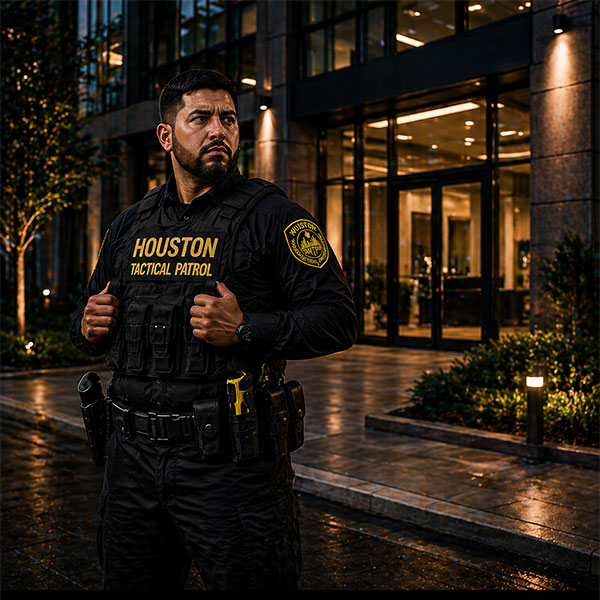
Houston Tactical Patrol LLC approaches event staffing as a managed security assignment, not just a shift to fill. That means matching coverage to the site, maintaining accountability, and providing personnel who understand that their conduct reflects on the client.
Prepare for Incidents Without Building the Event Around Them
No organizer wants to plan for a fight, medical emergency, severe weather issue, missing child, fire alarm, or unauthorized person entering a restricted area. Still, the event team should know how those situations will be handled. Preparation helps people respond with control rather than confusion.
A useful plan establishes communication channels, emergency meeting points, evacuation routes, and the process for contacting law enforcement, fire, or medical personnel. Guards should know where to direct guests and when to preserve a scene rather than disturb it. Event leadership should know who will document incidents and who will communicate with affected parties.
The best outcome is often the incident that never becomes visible to the crowd. Early intervention, calm de-escalation, and prompt coordination can prevent a small concern from interrupting the program or damaging the event’s reputation.
A well-run event should feel welcoming, not vulnerable. When trained security professionals are positioned where they are needed, your team can focus on guests, programming, and operations with the confidence that protection is being handled with discipline and care.