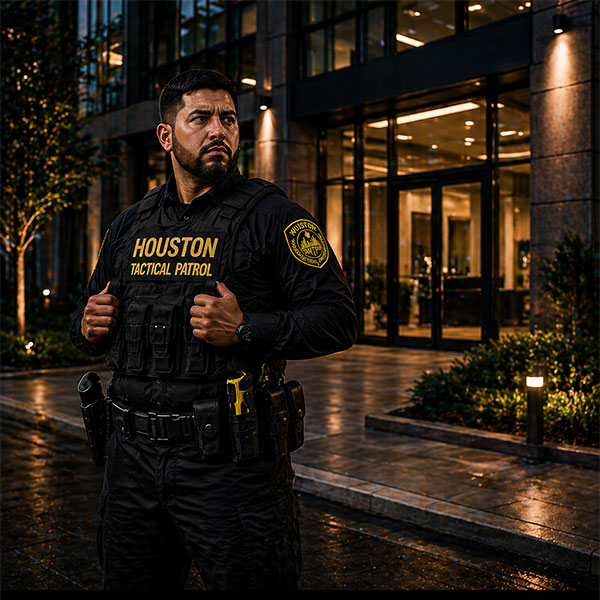
A standard guard presence can handle many properties. But when a site has repeated criminal activity, high-value assets, public traffic, cash handling, restricted areas, or elevated after-hours risk, tactical armed guarding security services become a serious operational decision, not a cosmetic upgrade. The point is not to create tension. The point is to put trained, licensed personnel in place who can deter threats, respond fast, and help restore control when the stakes are higher.
For property managers, business owners, event operators, and facility teams, the question is usually not whether security matters. It is whether the risk profile of the site calls for a more capable posture than an unarmed officer or occasional patrol can provide. That answer depends on the environment, the assignment, and the level of exposure your team is carrying every day.
What tactical armed guarding security services actually mean
Tactical armed guarding security services are not just armed officers standing post. In practice, the term points to a higher-readiness security model built for environments where visible deterrence, stronger incident response, and tighter site control matter. These assignments often involve trained personnel who can manage access points, monitor suspicious activity, support emergency procedures, and maintain a professional command presence without disrupting normal operations.
The tactical part matters. It suggests planning, positioning, communication, and readiness. A capable provider looks at entry and exit flow, lighting conditions, vulnerable zones, blind spots, shift timing, emergency contact procedures, and escalation protocols. Armed coverage without that planning is incomplete.
This is also where many buyers need clarity. An armed officer is not automatically the right answer for every site. If your biggest issue is customer service at a front desk or basic overnight visibility at a low-risk property, a different staffing model may be more practical. Tactical armed coverage is best reserved for situations where the consequences of delay, weak deterrence, or poor control are simply too high.
When tactical armed guarding security services make sense
Higher-risk environments tend to show clear patterns. You may be dealing with recurring trespassing, theft, vandalism, loitering, unauthorized access, or employee safety concerns. You may operate a construction site with expensive equipment, a commercial property with repeated break-in attempts, a multifamily community with after-hours disturbances, or an event where crowd behavior can shift quickly.
In those situations, a more visible and more capable security posture often changes behavior before an incident starts. That is one of the biggest advantages of armed coverage. It can discourage opportunistic crime, reinforce access rules, and send a clear message that the property is actively protected.
There is also a response advantage. When an issue develops, the value is not just that an officer is present. The value is that the officer is trained to observe, assess, communicate, and take appropriate action while following site instructions and legal standards. That helps reduce confusion in the first minutes of an incident, which is often when property loss, liability exposure, and safety problems escalate.
In Houston and other active commercial markets across Texas, this can be especially relevant for sites with long operating hours, large parking areas, public-facing entrances, or assets that are difficult to secure after dark. A tactical model is often less about appearances and more about matching security resources to actual operating conditions.
What good armed coverage looks like on the ground
The best armed guard assignment is controlled, professional, and predictable. It should make your property feel safer, not more chaotic. Officers should know the post orders, understand your priorities, and represent the site with discipline. That includes how they greet tenants, direct visitors, document incidents, enforce access procedures, and coordinate with management when something changes.
This is where provider quality matters more than service labels. Two companies can both offer armed guards, but the difference in hiring standards, supervision, communication, and training can be significant. For a client, that difference shows up in real ways. Reports are either timely or missing. Patrol patterns are either consistent or random. Incidents are either handled calmly or mishandled.
A strong provider will also understand that visible deterrence and customer-facing professionalism have to work together. In residential communities, hospitality settings, retail-adjacent properties, and live events, officers may need to project authority while still being approachable. That balance is not automatic. It comes from experience, screening, and clear expectations.
The trade-offs to think through before hiring
Armed security is a serious measure, and serious measures come with trade-offs. Cost is one factor. Tactical armed staffing typically carries a higher rate because the assignment requires more from the officer and the provider. If your site does not have a risk profile that justifies it, you may be paying for capability you do not need.
Public perception is another factor. Some environments benefit from a highly visible armed presence. Others may need a more measured approach, especially if the property relies on a welcoming guest experience or a sensitive resident relationship. That does not mean armed coverage is wrong. It means deployment should be thoughtful.
There is also the issue of scope. Security officers are there to protect people, property, and procedures within defined responsibilities. They are not a replacement for good lighting, working gates, functioning cameras, access control, key management, tenant communication, or management follow-through. Tactical armed guarding works best as part of a larger site security plan, not as a stand-alone fix for every operational gap.
How to evaluate a tactical armed security provider
Start with licensing and compliance. In Texas, that matters. You want a provider that operates legally, staffs qualified personnel, and can explain how assignments are managed. If a company is vague about credentials, insurance, reporting, or oversight, that is a warning sign.
Next, ask how they build the post. Do they assess the property and tailor the assignment, or do they offer the same guard package to every client? Higher-risk coverage should never feel generic. Your site may need standing post at one entrance, vehicle patrol at another, after-hours perimeter checks, visitor verification, or event-specific access control. The plan should reflect the property, not just the company brochure.
Communication is equally important. Decision-makers do not want to chase updates or wonder what happened overnight. You should know how incidents are reported, who supervises the assignment, how schedule coverage is maintained, and what escalation process is followed if a problem develops. Reliability often comes down to the basics done well.
It also helps to ask who the officers are. A disciplined provider should be able to speak clearly about training, field readiness, professionalism, and standards of conduct. Veteran-owned companies such as Houston Tactical Patrol LLC often emphasize chain of command, accountability, and mission focus, which can be valuable for clients who want a more structured service relationship.
Matching the service to the property
Not every site needs the same posture, even within the same portfolio. A construction project may need overnight armed coverage and perimeter checks. A commercial building may need a lobby officer during business hours and stronger after-hours patrol. A residential community may need armed officers only on weekends or during periods of increased criminal activity. An event may need temporary armed staffing tied to attendance size, alcohol service, or access restrictions.
That flexibility matters because over-securing a low-risk environment can create unnecessary cost, while under-securing a high-risk site can leave you exposed at exactly the wrong moment. The best service plans are specific about timing, duties, reporting, and escalation. They solve the problem in front of you instead of forcing you into a fixed template.
Another practical point is continuity. Security should reduce management burden, not add to it. If you are constantly retraining new guards, correcting post performance, or dealing with coverage gaps, the service is not doing its job. Tactical armed security should bring order, consistency, and confidence to the assignment.
Why professionalism matters as much as presence
A visible firearm does not create trust on its own. Training, judgment, and conduct do. Your officer may be the first person a tenant, vendor, employee, or guest sees when an issue occurs. That interaction affects not only safety outcomes but also your reputation.
Professional armed officers know how to stay alert without becoming confrontational. They understand the difference between presence and provocation. They follow procedure, document clearly, and stay aligned with the client’s chain of communication. That is what makes the service useful in the real world, where most incidents are resolved through awareness, verbal control, access enforcement, and quick coordination rather than force.
For clients, that should be reassuring. Tactical armed guarding security services are not about creating an aggressive atmosphere. They are about putting the right level of trained protection in place for the conditions your property actually faces. When the site, schedule, and risk level call for it, that decision can protect assets, support your people, and give you more control over what happens on your property after hours and during critical moments.
If you are weighing your options, start with the actual risks, not assumptions. The right security plan usually becomes clearer when you look honestly at exposure, traffic, history, and response needs.